




 Get Started
The Ultimate TPO Vs EPDM Battle (Flat Roof Comparison 2026)
08.27.2026
11 Min Read
Choosing a flat roof membrane is one of the most consequential decisions a commercial property owner or facilities manager makes. Get it right and the roof performs for decades with minimal intervention. Get it wrong and you are looking at premature failures, recurring repair costs, and the operational disruptions that come with an underperforming roof. The TPO vs EPDM debate has been ongoing for years, and in 2026 both materials remain widely used — for different reasons, on different buildings, in different situations. Understanding how each system performs in real commercial conditions is the foundation of a decision you will live with for the next 20 to 40 years.
Here is what this guide covers:
- What TPO and EPDM are and how each system is installed
- How the two materials compare across seven performance categories that matter for commercial properties
- Where each system has a genuine advantage over the other
- What affects the cost of each system in North Carolina
- How to decide which material is right for your specific building
Why Commercial Buildings Need the Right Flat Roofing Materials
Commercial flat roofs are not a commodity purchase. A single-ply membrane system on a 10,000 square foot building represents a significant capital investment, and the material choice affects not just the upfront cost but the maintenance budget, energy costs, and operational risk profile of the building for the next two to four decades. A roof that fails early or requires frequent repair creates costs that compound quickly across the building’s ownership period.
Both TPO and EPDM are proven single-ply membrane systems with extensive track records in commercial applications. Neither is universally superior — the right choice depends on the specific building, climate, budget, and ownership priorities. Durham and surrounding areas commercial property owners benefit from understanding both systems in detail before committing to either.
Choosing correctly between TPO and EPDM provides:
- Long-term cost control: The right material for your building and climate minimizes both repair frequency and the risk of premature replacement
- Energy performance: TPO’s reflective surface reduces cooling loads meaningfully in warm climates; understanding when that advantage justifies the cost difference matters for your operating budget
- Maintenance predictability: Each system has distinct failure modes and maintenance requirements; knowing them in advance allows you to budget and plan appropriately
- Warranty alignment: Both systems are available with manufacturer-backed warranties, but the terms, conditions, and coverage levels differ between products and installation methods
- Contractor availability: Both materials require experienced installers, but the installation methods differ; verifying contractor competency with your chosen system is part of the decision
6 Categories That Decide the TPO vs EPDM Roofing Systems Choice
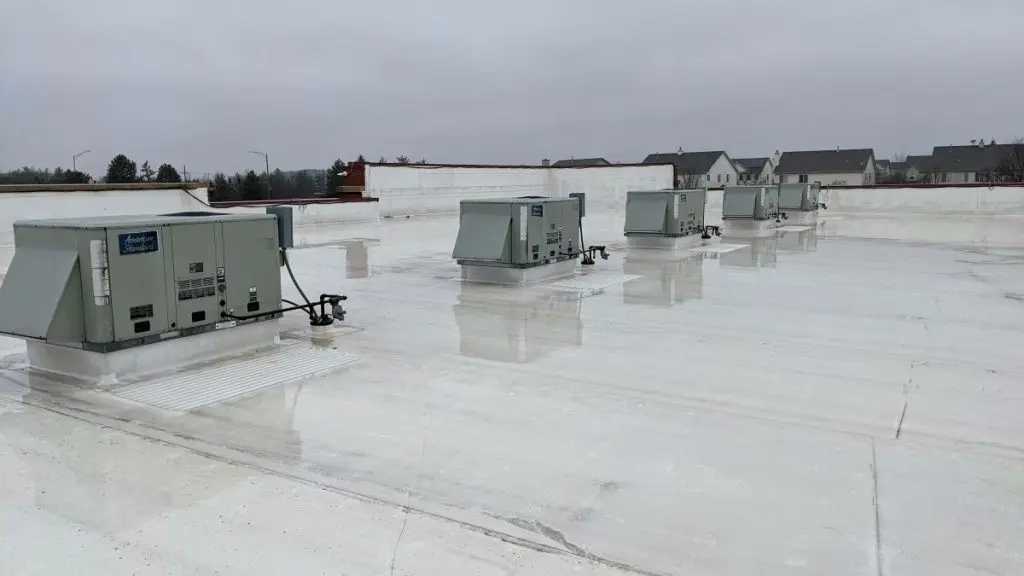
A meaningful comparison between TPO and EPDM requires looking beyond marketing claims and examining how each system actually performs across the factors that determine long-term value for a commercial property owner.
1. Energy Efficiency and Heat Reflectance on Commercial Roofing Systems
This is the category where TPO holds its clearest advantage over traditional EPDM. TPO is manufactured in white and light-colored options that reflect solar radiation rather than absorbing it. On a commercial building in a warm climate, a white TPO roof can reduce rooftop surface temperatures by 50 to 80 degrees Fahrenheit compared to a dark membrane, which directly reduces the cooling load on the HVAC systems below.
For Durham and surrounding areas commercial properties, where summer temperatures regularly push into the mid-90s and cooling costs represent a significant operating expense, the energy efficiency advantage of white TPO is a genuine and quantifiable benefit. Buildings that qualify for ENERGY STAR certification or pursue LEED points may find white TPO the better fit for compliance purposes.
EPDM is traditionally manufactured in black, which absorbs heat and increases rooftop temperatures. White-coated EPDM options are available and provide improved reflectance, but they add cost and require maintenance to remain effective. For property owners where energy efficiency is the primary driver, TPO is the stronger default choice.
- White TPO meets ENERGY STAR Cool Roof requirements without additional coatings
- Black EPDM can increase rooftop surface temperatures significantly, raising cooling loads
- White-coated EPDM is an option but adds cost and requires periodic recoating to maintain reflectance
2. Durability and Longevity
EPDM has a longer and better-documented track record for longevity than TPO. EPDM has been installed on commercial roofs since the 1960s, giving the industry over six decades of real-world performance data. Properly installed EPDM membranes routinely achieve 25 to 50-year service lives, and many installations from the 1980s are still performing today.
TPO was introduced commercially in the early 1990s and has been refined significantly since its early formulations, which had documented quality issues. Modern TPO products from established manufacturers are substantially more durable than early-generation products, but the category lacks the long-term field data that EPDM provides. Typical TPO lifespans are cited at 15 to 30 years, though well-installed modern systems may perform longer.
For Durham and surrounding areas property owners prioritizing longevity and minimizing replacement frequency, EPDM’s track record provides more confidence in long-term performance than TPO’s shorter commercial history.
- EPDM: 60-plus years of commercial performance data, routinely achieving 25 to 50-year service lives
- TPO: approximately 30 years of commercial use, typical cited lifespan of 15 to 30 years
- For buildings where minimizing replacement frequency is a priority, EPDM’s longevity record is a meaningful advantage
3. Seam Strength and Leak Resistance in EPDM and TPO Systems
Seams are the most common failure point on any membrane roofing system, and TPO and EPDM handle seaming in fundamentally different ways with meaningfully different results.
TPO seams are heat-welded using a hot-air gun that melts the membrane edges together. When done correctly by an experienced installer, heat-welded TPO seams are stronger than the membrane itself — the weld creates a homogeneous bond that is more resistant to separation than the base material on either side. This is a genuine structural advantage in high-wind environments or on roofs with frequent thermal movement.
EPDM seams are made with adhesive tape or liquid adhesive, which creates a bonded overlap rather than a fused connection. Properly installed EPDM seams perform well, but adhesive seams are more vulnerable to failure over time from UV exposure, thermal cycling, and improper installation than heat-welded seams. EPDM seam failures are the most common maintenance issue on aging EPDM installations.
- TPO heat-welded seams are structurally stronger than adhesive-based EPDM seams when properly installed
- EPDM seam quality is highly dependent on adhesive application and surface preparation
- In high-wind or extreme thermal cycling environments, TPO’s welded seams provide a meaningful performance advantage
4. Chemical Exposure Resistance: Where TPO and EPDM Differ
This is a category that rarely appears in general roofing comparisons but matters significantly for specific commercial applications. Restaurant exhaust systems, food processing facilities, and certain manufacturing operations discharge grease, oils, and chemicals through rooftop exhaust vents. Those discharges land on the roof membrane and, over time, degrade materials that are not resistant to them.
EPDM is vulnerable to oil, grease, and petroleum-based chemicals. Regular exposure degrades the rubber compound, causes the membrane to swell and blister, and significantly shortens service life. For buildings with rooftop exhaust systems that discharge grease, EPDM is not the appropriate membrane choice.
TPO is inherently resistant to oils, greases, and a range of industrial chemicals. For restaurant rooftops, food service facilities, and certain manufacturing applications in Durham and surrounding areas, TPO is the technically correct choice regardless of other comparative factors.
- EPDM degrades when exposed to oils, greases, and petroleum-based chemicals
- TPO resists chemical exposure and is the recommended choice for food service and applicable manufacturing environments
- Chemical resistance should be evaluated against the specific building use before membrane selection
5. Installation Complexity and Contractor Availability
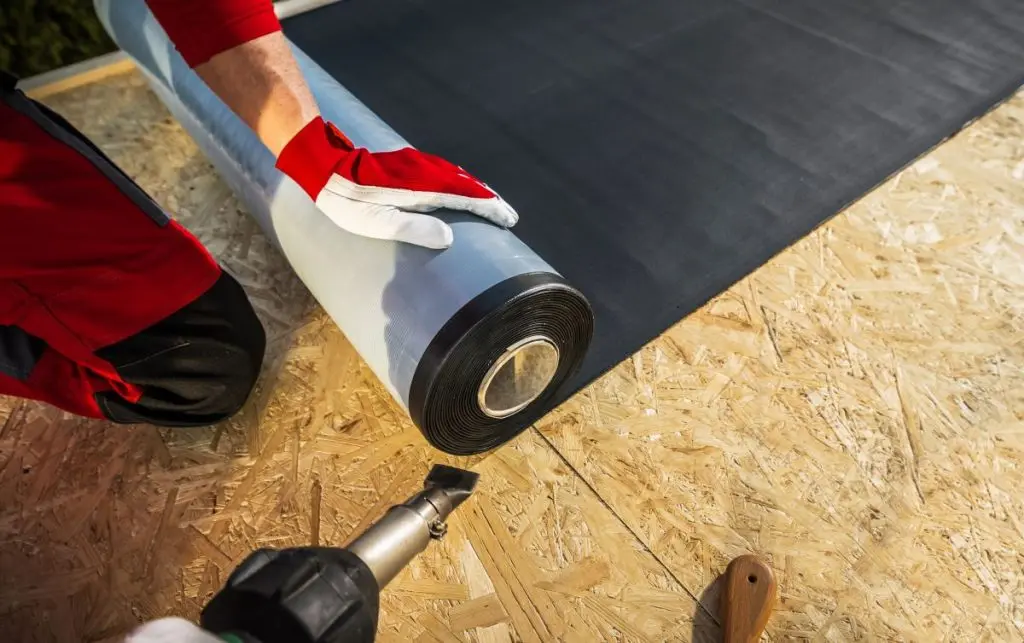
TPO installation requires hot-air welding equipment and trained operators. The welding process requires skill to execute correctly, seam temperatures and speeds must be precisely controlled, and variations in either direction produce defective seams that fail prematurely. On complex roofs with many penetrations, curbs, and transitions, the number of weld points multiplies and the opportunity for installation errors increases proportionally.
EPDM installation is simpler and requires less specialized equipment. Fully adhered EPDM uses brush-applied adhesive, while mechanically fastened and ballasted systems require even less specialized technique. The result is broader contractor availability and generally lower sensitivity to installation skill variation.
For Durham and surrounding areas property owners, verifying that the contractor bidding TPO installation has documented experience and the correct equipment is more critical than for EPDM. A poorly executed TPO seam can look acceptable from a distance and fail within years. A reputable contractor with verifiable TPO experience is a non-negotiable requirement for that system.
- TPO requires skilled hot-air welding; installation quality is more variable than EPDM
- EPDM installation is less equipment-dependent and more tolerant of installation skill variation
- Contractor vetting is more critical for TPO than for EPDM due to the consequences of seam weld failures
6. Puncture and Impact Resistance
Both membranes are available in a range of thicknesses, and both are subject to puncture from foot traffic, equipment installation, and hail. The comparison at equivalent thicknesses generally favors EPDM slightly for puncture resistance, as the rubber compound deforms under impact rather than cracking the way some TPO formulations can.
TPO at 60 mil or 80 mil thickness performs well against most puncture risks encountered on commercial roofs, and high-traffic areas can be protected with walk pads regardless of membrane type. Premium EPDM in 60 mil or 90 mil thickness provides excellent impact resistance for roofs with frequent mechanical contractor access.
- Both systems are available in thicknesses appropriate for high-traffic commercial applications
- EPDM’s rubber compound deforms under impact; TPO can crack under sharp impact depending on formulation
- Walk pads are recommended for both systems in high-traffic zones around HVAC equipment
EPDM Roofing vs TPO: Where Each System Has a Clear Advantage
Neither TPO nor EPDM is the right answer for every building. Here is a practical framework for when each system is the stronger choice.
When TPO Is the Right Choice for Commercial Roofing
TPO is the better option when energy efficiency is a primary driver, when the building is in a hot climate where cooling cost reduction from a reflective surface delivers meaningful ROI, when the rooftop is subject to grease or chemical exposure from exhaust systems, or when the project budget accommodates the heat-welded installation required for strong seam performance. TPO also makes sense when the contractor has documented, verifiable experience with heat-welded installation and the correct equipment to execute it properly.
When EPDM Roofing Systems Are the Right Choice
EPDM is the stronger choice when longevity is the top priority, when the property owner values a material with decades of documented field performance over a system with a shorter track record, when maintenance simplicity matters because contractor access to the site is limited, or when the building’s use does not involve chemical or grease exposure that would degrade the rubber compound. EPDM is also the better choice when the budget is constrained, as it is typically less expensive to install than equivalent TPO on most commercial projects.
When the Decision Is Genuinely Close
On a standard commercial office building, warehouse, or retail structure in Durham and surrounding areas where energy efficiency, longevity, and budget are all factors of roughly equal weight, the decision often comes down to contractor experience and warranty terms. The system that is backed by the best warranty and installed by the most experienced contractor for that specific system is frequently the right answer, regardless of which membrane it involves.
TPO vs EPDM Roofing: Side-by-Side Summary for Commercial Buildings
| Category | TPO | EPDM |
| Energy efficiency | Excellent (white membrane) | Moderate (black standard; white-coated available) |
| Longevity | 15 to 30 years typical | 25 to 50 years typical |
| Seam strength | Excellent (heat-welded) | Good (adhesive-based) |
| Chemical resistance | Excellent | Poor with oils and grease |
| Installation complexity | Higher (requires skilled welding) | Lower (adhesive application) |
| Puncture resistance | Good to excellent by thickness | Excellent (rubber deformation) |
| Repair simplicity | Moderate (welding required for seams) | High (adhesive patches) |
| Typical installed cost | Moderate to high | Low to moderate |
Making the Right Energy Efficient Roofing Decision for Your Durham Property
TPO vs EPDM is ultimately a question of which system’s advantages align best with your building’s specific demands. TPO wins on energy efficiency, seam strength, and chemical resistance. EPDM wins on longevity track record, installation simplicity, repair ease, and cost. Neither system is universally superior, and the best decision is the one made with a complete understanding of your building’s use, your operating priorities, and the qualifications of the contractor installing the system.
At Barkley-Jensen Roofing and Restoration, we help commercial property owners throughout Durham and surrounding areas evaluate both systems honestly and select the right membrane for their specific building. We are GAF Certified, licensed, and insured in North Carolina, and we bring the same transparency and craftsmanship to every commercial project we take on. If you are planning a flat roof replacement or upgrade and want a straight assessment of which system makes the most sense for your property, contact us today and we will put together a thorough evaluation and honest recommendation.