

 Get Started
Curling Shingles (6 Causes You Shouldn’t Ignore)
10.27.2026
9 Min Read
Few roof problems are as easy to spot, or as easy to dismiss, as shingles lifting at the edges. For homeowners in Chapel Hill and surrounding areas, curling shingles are often the first visible sign of heat, moisture, or age problems that run deeper. Left alone, they let wind-driven rain work under the roofline and into the deck. Knowing what causes the problem helps you choose between a small fix and a bigger one. A closer look at how a healthy residential roof is built and maintained makes the warning signs easier to read.
Here’s what this guide covers:
- Why curled shingles are a warning sign and not just a cosmetic flaw
- The six most common causes and how to recognize each one
- How to tell cupping, clawing, and buckling apart
- When spot repair works and when replacement is the smarter investment
- Why the cause has to be fixed before new shingles go on
Why Curling Shingles Deserve Attention Before They Fail
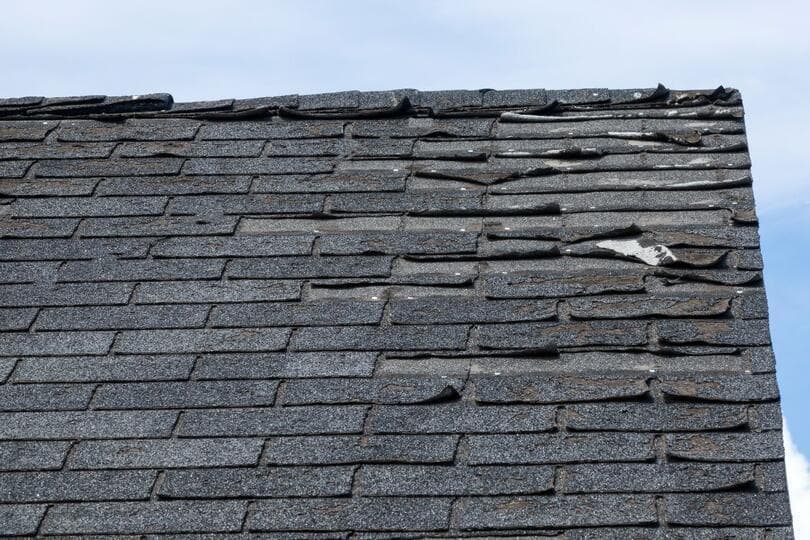
A shingle is designed to lie flat, seal to the course below it, and shed water down the roof. Once an edge lifts or a tab bows, that seal is broken and the shingle can no longer do its job reliably. The change looks cosmetic at first, but it opens a path for wind and water that grows with every storm.
In Chapel Hill and surrounding areas, hot, humid summers and frequent thunderstorms keep asphalt shingles under steady stress. Research published in Roofing Contractor magazine found that poor or absent attic ventilation shortens shingle service life by an average of 24 percent, which helps explain why curling often appears years ahead of schedule. Here is why it is worth acting early:
- Wind damage risk: Curled edges catch the wind, making it easier for gusts to tear shingles loose or push rain underneath them.
- Hidden leaks: Gaps created by lifted tabs allow water to reach the underlayment and deck, where damage spreads out of sight.
- Accelerated granule loss: Bowed shingles shed granules faster at the raised edges, which exposes the asphalt to UV light and speeds up aging.
- A warning of bigger problems: Curling is frequently a symptom of poor ventilation, trapped moisture, or an aging roof, so it points to causes that a patch will not solve.
- Lower repair cost when caught early: Addressing the cause while only a few shingles are affected usually costs far less than replacing a roof after leaks set in.
6 Causes Of Curling Shingles You Shouldn’t Ignore
Curling rarely has a single trigger. Most cases trace back to one of six causes, and identifying the right one matters because it determines whether a repair will hold or the same problem returns in a year. Use the list below to match what you see on your roof with what is likely behind it.
1. Poor Attic Ventilation
Heat and moisture that cannot escape the attic cook shingles from below. The asphalt binder dries out and contracts faster than the fiberglass mat, which pulls edges and tabs out of shape. Because it is among the most commonly cited causes of premature curling, ventilation should be the first thing checked on any roof that curls early.
- Look for a lack of balanced intake and exhaust, such as soffit vents paired with a ridge vent
- Check whether soffit vents are blocked by insulation
- Expect curling to appear first on the slopes that get the most sun
2. Age And Natural Weathering
As asphalt shingles age, their oils dry out and their granules shed, so they lose flexibility. Curling is uncommon on shingles younger than about 12 years, so when it appears on an older roof it usually signals that the shingles are in the second half of their life. Many asphalt shingles are rated for roughly 20 to 30 years, depending on the product and conditions.
- Widespread curling past the 15 to 20 year mark typically points toward replacement planning
- Granules collecting in gutters often show up alongside curling
- Curling that appears on every slope, not just one, leans toward age as the cause
3. Trapped Moisture In The Attic Or Deck
Moisture from roof leaks, condensation, or humid indoor air rising into the attic can saturate the underside of the shingles and the deck. The underside swells while the exposed surface dries and shrinks, which pushes the edges upward. This pattern is closely tied to cupping.
- Bathroom and kitchen exhaust fans that vent into the attic add moisture to the space
- Thin insulation or poor air sealing lets humid indoor air rise into the attic
- Dark or damp decking visible from the attic often accompanies moisture-driven curling
4. Shingles Installed Over An Old Layer
A roof-over traps heat and moisture between the old and new layers. The top layer cannot breathe or dry properly, so it can curl faster than shingles installed in a single layer. An uneven first layer also leaves the new shingles poorly supported at their edges.
- Most building codes allow no more than two total roofing layers
- Added layers hide any existing deck damage from view
- Curling that appears within the first several years on a roof-over deserves a close look
5. Installation Mistakes

Nails placed too high or too low, shingles that were not seated flat, wrinkled underlayment beneath the shingles, and poor sealing at the adhesive strip all leave shingles prone to lifting. Workmanship problems often show up in specific areas rather than across the whole roof.
- Nails outside the manufacturer’s marked zone weaken the hold of each shingle
- Wrinkled or poorly fastened underlayment can telegraph through and distort the shingles above it
- Installation issues often appear along one slope or in certain courses
6. Manufacturing Defects Or The Wrong Shingle Type
Occasionally a batch of shingles is made poorly, or a product is a poor match for the climate and roof pitch. These cases are less common than ventilation problems or age, but they can produce curling on a young roof. If your roof is under 10 years old and curling despite good ventilation, the manufacturer’s warranty may apply.
- Document the curling with dated photos
- Keep the original contract, shingle brand, and installation date on file
- Have a professional assess the roof before contacting the manufacturer
Cupping Versus Clawing: Reading The Pattern On Your Roof
Curling comes in more than one form, and the shape of the distortion offers clues about the cause. Terminology varies from one source to another, so focus on the pattern you see rather than the label.
- Cupping: The edges turn upward and the center sags, creating a bowl shape. It is most often tied to moisture trapped beneath the shingle or to attic heat baking the shingle from below.
- Clawing: The edges stay down while the center or the tabs bow, or the tabs curl in an irregular way. It is commonly linked to excessive heat from poor ventilation, age-related shrinkage, or a manufacturing issue.
- Buckling: Shingles ripple or form a visible ridge. It is often connected to wrinkled underlayment, deck movement, or moisture.
- Where it appears: Curling concentrated on sun-exposed slopes points toward heat and ventilation, while patchy curling near valleys or penetrations can mean moisture from a leak.
- How widespread it is: Isolated curling can often be handled with spot repair, but curling across several slopes usually means a roof-wide cause such as age or ventilation.
You can check a lot from the ground with a pair of binoculars on a clear day, and an attic visit adds more clues. Look for dark or damp decking, daylight at the roofline, and insulation blocking the soffit vents. Staying off a curled roof is wise, since brittle shingles crack under foot traffic and the surface can be slick. In Chapel Hill and surrounding areas, a professional inspection is a safer way to get the full picture.
Repair Or Replace Curled Shingles: How To Decide
Once you know what is causing the curling, the next question is how far the problem reaches. The right answer depends on the age of the roof, how widespread the curling is, and whether moisture has already reached the deck. A simple comparison makes the decision easier to see.
| Situation | Likely Cause | Usual Direction |
| A few curled shingles, roof under 10 years old | Installation issue or isolated defect | Spot repair plus a ventilation check |
| Curling on one sun-facing slope | Heat and poor ventilation | Correct ventilation, then replace affected shingles |
| Widespread curling, roof 15 or more years old | Age and weathering | Begin planning for replacement |
| Curling with stained or soft decking | Trapped moisture | Repair the deck, fix the moisture source, replace affected sections |
| Curling on a roof-over | Trapped heat and moisture | Evaluate for a full tear-off |
When Spot Repair Makes Sense

If only a handful of shingles are affected and the roof has plenty of life left, targeted repair can be a sensible choice. Replacing damaged shingles or securing them with the right sealant can buy time, as long as the underlying cause is addressed too.
- The curling is limited to a small area
- The deck beneath is dry and sound
- Ventilation is balanced or can be corrected affordably
When Replacement Is The Better Investment
A common rule of thumb among roofing professionals is that when roughly 30 percent of the roof is damaged, or the roof is past about 80 percent of its expected lifespan, replacement usually makes more financial sense than continued repairs. At that point, spot fixes tend to stack up in cost without stopping the spread.
- Curling is widespread across multiple slopes
- Shingles are also cracking, losing granules, or showing bare patches
- Leaks or deck damage have already appeared
Fix The Cause Before New Shingles Go On
Replacing curled shingles without correcting the reason they curled sets the new roof up to fail the same way. If poor ventilation drove the problem, balanced intake and exhaust needs to be part of the project. If moisture is involved, the source has to be found and corrected first. Skipping this step is the most common reason curling returns.
Get Your Curling Shingles Checked Before The Next Storm
Curled shingles are a signal, and the cost of ignoring that signal grows with every wind event and rain cycle. Catching the cause early keeps your options open, whether that means a targeted repair, a ventilation upgrade, or a well-planned replacement. For homeowners in Chapel Hill, NC, and surrounding areas, a timely inspection is one of the simplest ways to protect the roof you have.
At Barkley-Jensen Roofing and Restoration, we look at the whole roof system, including ventilation and the deck, so you get an honest answer about what is causing the problem and what it will take to fix it. If you have noticed shingles lifting or bowing on your roof, contact us today and the Barkley-Jensen team will schedule your inspection and walk you through what we find.