




 Get Started
Flat Roof Leak Repair: 7 Ways Leaks Happen and How They’re Fixed
09.15.2026
12 Min Read
A flat roof leak rarely announces itself loudly. By the time a water stain appears on a ceiling or a puddle shows up on a warehouse floor, the damage has usually been spreading for weeks, sometimes months. For property owners in Cary and surrounding areas, understanding flat roof leak repair before a problem reaches that stage is the difference between a targeted fix and a costly emergency. Knowing where leaks originate and what it takes to address them correctly helps you ask better questions, make smarter decisions, and avoid the cycle of repairs that never quite hold. If you want to understand what a professional approach to flat roofing looks like on commercial properties from the first inspection forward, the details matter.
Here’s what this guide covers:
- Why flat roofs are more vulnerable to leaks than pitched systems
- The seven most common causes of flat roof leaks
- How each type of leak is properly repaired
- What to look for when choosing a flat roofing contractor
- How Barkley-Jensen approaches flat roof leak repair across commercial properties
Why Flat Roof Leaks Demand A Different Approach
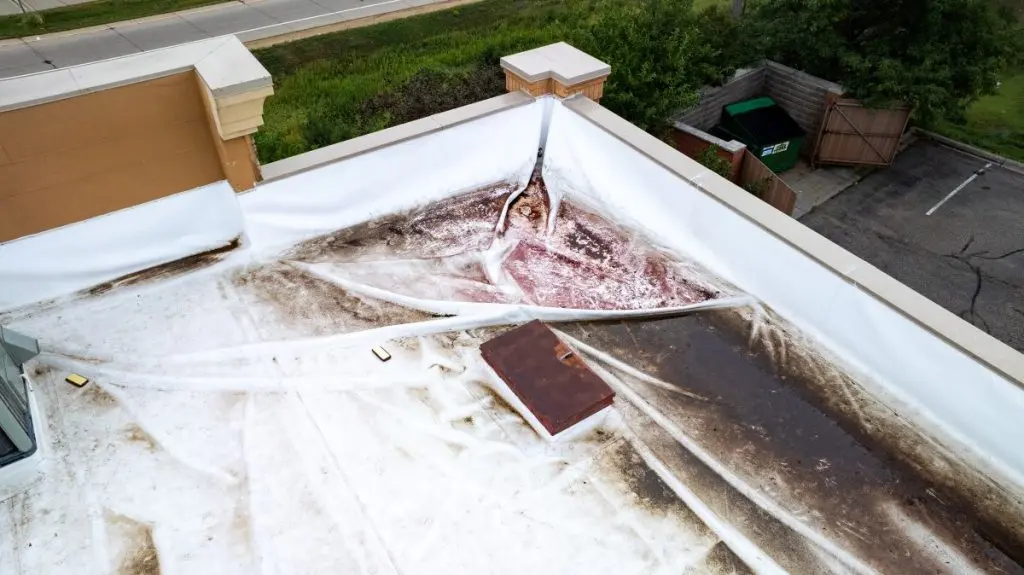
Flat roofs and sloped roofs operate under entirely different physical conditions. On a pitched roof, water sheds in seconds. On a flat or low-slope system, water lingers, pooling wherever the slope is insufficient or drainage is compromised. That fundamental difference changes everything about how leaks develop, where they show up, and how repairs need to be made.
Property owners in Cary and surrounding areas deal with North Carolina’s mix of heavy summer storms, high humidity, and UV intensity, all of which accelerate the failure of flat roofing components over time. The margin for error on a flat system is thin. A small seam separation or a slightly clogged drain can turn into a significant interior leak within a single rain event.
- Slow drainage creates opportunity: On a low-slope system, even minor drainage issues give water time to find every weak point in the membrane surface, including seams, penetrations, and flashing edges.
- Leaks rarely appear directly above the entry point: Water that enters a flat roof membrane travels horizontally before it shows up on a ceiling. That makes identifying the true source of a flat roof leak significantly harder than on a sloped system.
- Unaddressed leaks accelerate structural damage: Moisture that reaches the insulation layer beneath a flat roof membrane is particularly destructive. Saturated insulation loses its thermal value, promotes mold growth, and puts weight-related stress on the roof deck below.
- Repairs must match the existing system: Flat roofing is not a universal system. TPO, EPDM, modified bitumen, and PVC each require different repair techniques and compatible materials. An incompatible patch will fail, sometimes faster than the original problem it was covering.
- Maintenance history changes the repair equation: A well-maintained flat roof with a single failure point is a straightforward repair. A flat roof that has been neglected for several years often requires a comprehensive evaluation before any targeted repair makes financial sense.
7 Common Causes Of Flat Roof Leaks And How They’re Fixed
Nearly every flat roof leak can be traced back to one of a handful of identifiable failure points. Here’s a breakdown of the seven most common causes, what drives each one, and how a qualified contractor addresses it properly.
1. Ponding Water
Ponding water is the most common underlying factor behind flat roof failures, and it’s one that many property owners underestimate because a dry ceiling feels like confirmation that everything is fine. The National Roofing Contractors Association defines ponding as any water that remains on a roof surface more than 48 hours after rain stops. Any flat roof that consistently fails that threshold is at elevated risk of membrane failure and, in some cases, warranty exclusion.
Water that sits on a membrane works at every seam, edge, and penetration simultaneously. Over time, even a well-installed membrane will yield under that sustained pressure.
- Caused by clogged drains, inadequate slope, or structural sagging
- Repair options include drain clearing, additional drain installation, and tapered insulation systems that redirect water
- Tapered insulation is the long-term solution for roofs with inadequate slope built into the original design
2. Failed Flashing
Flashing is the metal or membrane material installed at every point where the flat roof surface meets a vertical element: parapet walls, HVAC curbs, vents, pipes, skylights, and roof edges. It is the most leak-prone component on any flat roof, and it’s often the first thing to fail as a building settles and temperature cycling causes materials to expand and contract.
In Cary and surrounding areas, the thermal range between winter lows and summer highs puts consistent stress on flashing details year after year. Even well-installed flashing has a finite service life at these stress points.
- Signs include visible separation, cracking sealant, lifted edges, or rust staining on metal components
- Repair involves removing failed material, cleaning the substrate, and installing new flashing with compatible materials and proper termination details
- Parapet wall flashing and HVAC curb flashing are the most frequently failed points on commercial flat roofs
3. Membrane Seam Failure
Every flat roof membrane is installed in overlapping sheets that are bonded together at the seams. On TPO and PVC systems, seams are heat-welded. On EPDM systems, seams are typically tape or adhesive-bonded. All seam types are subject to failure over time from thermal expansion and contraction, UV degradation, and installation errors that create cold welds or insufficient overlap from the start.
Seam failure is particularly problematic because it’s hard to identify visually until the separation is significant. Infrared scanning and moisture detection tools are often required to find seam failures before they become active leaks.
- Heat-welded seams on TPO or PVC that have failed are typically re-welded with compatible material or covered with manufacturer-approved seam tape
- EPDM seam failures require cleaning, priming, and re-bonding with appropriate seam tape or liquid adhesive
- Any repair must use materials that are chemically compatible with the existing membrane
4. Membrane Punctures And Tears
Flat roof membranes take physical abuse from multiple sources. HVAC technicians performing routine service, equipment installers, hailstorms, and wind-driven debris all create opportunities for punctures. Even heavy bird activity on a membrane in poor condition can cause abrasion damage over time.
On a commercial building, rooftop foot traffic is one of the most underappreciated sources of membrane damage. Every service call that brings a technician to the roof creates the potential for a puncture if proper walkway protection isn’t in place.
- Small punctures are repaired with compatible patch material bonded to a clean, primed surface
- Larger tears or areas of widespread damage may require section replacement rather than patching
- Installing walkway protection pads in high-traffic areas around HVAC equipment prevents future puncture damage
5. Clogged Or Damaged Roof Drains
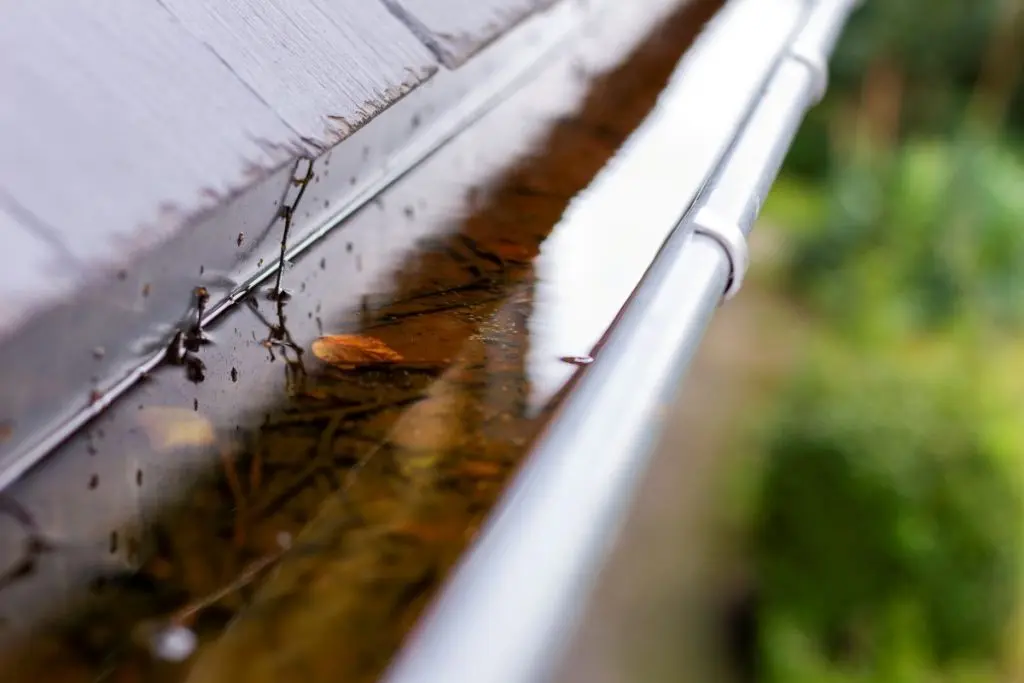
A flat roof’s drainage system is its primary defense against ponding. When drains clog with debris, leaves, or accumulated dirt, water backs up across the entire roof surface. In severe cases, the weight of standing water can exceed the structural capacity of the deck below.
Beyond simple clogging, drain collars and drain assemblies deteriorate over time, and the membrane material bonded to the drain flange can crack, lift, or separate. When that happens, water doesn’t just back up; it channels directly down through the failed drain seal.
- Regular debris removal from drain baskets is the most basic and effective maintenance step available
- Failed drain collars require replacement of the drain assembly and re-termination of the membrane at the flange
- Secondary overflow drains, which many flat roofs are required to have by code, should be checked at the same time
6. Penetration Seal Failures
Every pipe, vent, exhaust stack, and conduit that passes through a flat roof membrane is a potential leak point. The boots and pitch pockets used to seal these penetrations are typically made from materials that deteriorate faster than the membrane itself, particularly when exposed to UV radiation and the temperature extremes that North Carolina summers produce.
Property owners in Cary and surrounding areas often discover penetration leaks after a period of particularly intense UV exposure in summer, because that’s when degraded sealant tends to crack and separate under temperature stress.
- Failed pipe boots are cut away and replaced with new compatible boots bonded to the membrane
- Pitch pockets, the older method of sealing penetrations with an asphalt or urethane filler, require periodic refilling as the material shrinks
- The preferred modern solution is a prefabricated penetration boot that integrates directly with the membrane system
7. Edge Metal And Perimeter Failures
The perimeter of a flat roof is where the membrane terminates, typically at a metal edge or coping cap. These termination points are vulnerable to wind uplift and water infiltration if the edge metal lifts, the membrane pulls away from the termination bar, or the sealant at the lap joints between edge metal sections opens up.
Wind events are the most common trigger for perimeter failures. Even a brief period of wind uplift on edge metal that’s insufficiently fastened can create a pathway for water to get behind the membrane and travel across the entire roof deck before appearing as an interior leak.
- Lifted edge metal is refastened and re-sealed, with additional fasteners added if the original fastening pattern was inadequate
- Membrane that has separated from its termination bar is re-bonded and covered with compatible cover tape or flashing material
- Coping caps that are loose or have open joints are re-set and re-caulked with appropriate sealant
Understanding Your Flat Roof System Before Repairs Begin
Before any repair work starts, knowing what type of membrane your flat roof uses changes what materials are selected and what techniques are applied. Mixing incompatible materials is one of the most common causes of flat roof repairs that don’t hold.
According to data tracked by NRCA reporting contractors, TPO accounts for approximately 58% of new commercial flat roof installations, with EPDM at 18% and modified bitumen at 10%. That distribution means most commercial flat roofs installed in the last decade are TPO systems, but a significant number of older buildings in Cary and surrounding areas still have EPDM or modified bitumen systems in place, and those require a completely different repair approach.
- TPO (Thermoplastic Polyolefin): The most widely installed commercial membrane today. Recognized by its white or light-gray color and heat-welded seams. Repairs require a heat gun or welder and TPO-compatible patch material. The biggest advantage of heat-welded seams is their strength when properly done; the risk is that cold welds from improper technique look fine but fail quickly.
- EPDM (Ethylene Propylene Diene Monomer): A rubber membrane typically black in color and bonded with adhesive or ballasted with stone. EPDM is highly durable and has a strong performance history, with properly installed systems routinely reaching 25 or more years. Seam repairs use EPDM-compatible tape and primer. Incompatible materials will not bond permanently.
- Modified Bitumen: An asphalt-based membrane installed in layers, often torched or cold-applied. Common on older commercial buildings and some low-slope residential additions. Repairs require compatible modified bitumen material and appropriate bonding method. Surface granules that have worn away need to be factored into any repair evaluation.
- Built-Up Roofing (BUR): Multiple alternating layers of reinforcing fabric and asphalt, typically topped with gravel. Less common on newer buildings, but still present on many older commercial properties. BUR repairs involve cutting back to sound material and rebuilding the system layers.
What To Look For In A Flat Roof Leak Repair Contractor

Not every roofing contractor is equipped to work on commercial flat roof systems. The materials, diagnostic tools, and installation techniques differ significantly from residential steep-slope work. Choosing a contractor without verified flat roof experience is one of the fastest ways to end up paying for the same repair twice.
Diagnostic Capability
A qualified flat roof contractor doesn’t just patch where the ceiling is wet. They use tools and methodology to find where water actually entered the membrane, which is almost always a different location from where it shows up inside. Infrared thermal imaging, nuclear moisture detection, and systematic visual inspection are the standard tools for locating flat roof leaks accurately.
Membrane Compatibility Knowledge
Ask specifically which membrane systems the contractor is trained and certified to work on. If a contractor proposes using a generic sealant on a TPO seam failure, that’s a clear signal they’re not approaching the repair correctly. Each system has manufacturer-approved repair methods and materials, and a qualified contractor knows them.
Commercial Project Experience
Flat roof leak repair on a commercial building involves considerations that don’t apply to residential work, including occupied building access, HVAC equipment coordination, safety requirements for larger roof surfaces, and documentation for insurance or warranty purposes. Experience with commercial properties specifically is not optional.
Written Scope And Warranty
Any legitimate flat roof repair contractor will provide a written scope of work that describes exactly what is being repaired, what materials are being used, and what warranty covers the repair itself. A verbal description and a handshake are not adequate for a commercial roofing project.
Protect Your Property With The Right Repair The First Time
A flat roof leak that gets patched incorrectly doesn’t go away; it relocates. The cycle of repair after repair on the same roof is almost always a sign that the root cause was never properly identified or that incompatible materials were used in a prior repair. Property owners in Cary and surrounding areas deserve a contractor who brings the diagnostic tools and system knowledge to find the real problem and fix it in a way that lasts.
At Barkley-Jensen Roofing and Restoration, we bring that standard to every flat roof project we take on. Whether you’re dealing with an active leak that needs immediate attention or a roof that’s showing early signs of wear, we’ll give you a clear, honest assessment and a repair plan that makes sense for your building. Contact us today and the Barkley-Jensen team will get your property inspected and your options laid out without the guesswork.