




 Get Started
Roof Inspection Red Flags: 9 Problem Areas Homeowners Often Miss
05.05.2026
7 Min Read
Your roof works hard every day to protect your home, but small issues can go unnoticed until they turn into costly damage. A thorough roof inspection helps catch these problems early and keeps your home safe. Many homeowners who take time to ensure their roof is properly maintained and performing as it should are able to avoid major repairs and extend the life of their roofing system.
In this guide, you will learn:
- The most common roof inspection red flags
- Hidden problem areas homeowners often overlook
- What to check during a routine inspection
- When to call a professional for help
- How to prevent small issues from becoming expensive repairs
Why Roof Inspections Are More Important Than Most Homeowners Realize
A roof inspection is not just something you do after a storm. It is a proactive way to protect your home, avoid unexpected expenses, and ensure your roof continues to perform as it should.
For homeowners in Chapel Hill and surrounding areas, where weather conditions can include heavy rain, humidity, and seasonal storms, routine inspections play a critical role in preventing damage.
Here are the biggest benefits of regular roof inspections:
- Early Problem Detection: Identifying small issues like loose shingles or minor leaks before they become major repairs.
- Cost Savings: Addressing damage early is almost always less expensive than waiting until it worsens.
- Extended Roof Lifespan: Regular inspections and maintenance help your roof last longer.
- Improved Safety: Prevents structural issues that could compromise your home.
- Peace of Mind: Knowing your roof is in good condition reduces stress, especially during storm season.
Taking a proactive approach helps you stay ahead of potential issues.
9 Roof Inspection Red Flags You Should Never Ignore
Even if your roof looks fine from the ground, there are several warning signs that can indicate underlying problems. These are the areas homeowners most commonly miss during a roof inspection.
1. Missing or Damaged Shingles
Shingles are your roof’s first line of defense against the elements.
- Cracked, curling, or missing shingles
- Bald spots where granules have worn away
- Uneven or lifted edges
These issues can allow water to penetrate and cause further damage.
2. Granule Loss and Surface Wear
Asphalt shingles lose granules over time, but excessive loss is a red flag.
- Granules collecting in gutters
- Shiny or exposed areas on shingles
- Reduced protection from UV rays
This often indicates the roof is aging or deteriorating.
3. Flashing Failures Around Roof Features
Flashing seals vulnerable areas like chimneys, vents, and skylights.
- Rusted or corroded flashing
- Gaps or loose sections
- Improper installation
Flashing issues are one of the leading causes of roof leaks.
4. Sagging Roof Sections
A sagging roof is a serious structural concern.
- Uneven rooflines
- Visible dips or low spots
- Soft or spongy areas when walked on
This may indicate water damage or weakened roof decking.
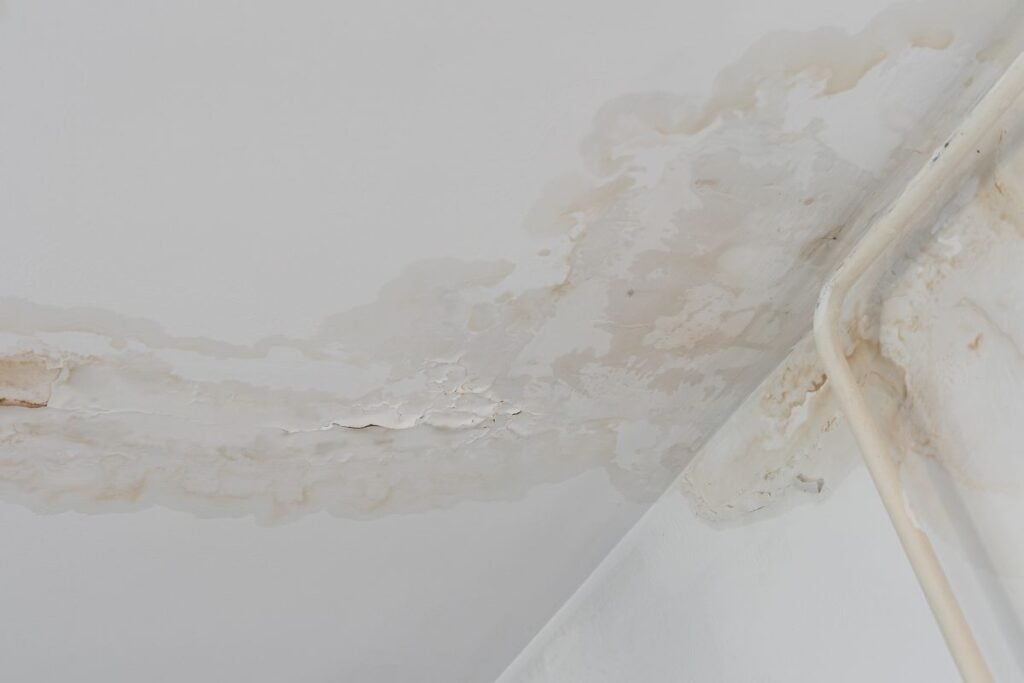
5. Water Stains Inside the Home
Interior signs often reveal roofing problems before they are visible outside.
- Stains on ceilings or walls
- Peeling paint or bubbling drywall
- Mold or mildew growth
These signs suggest moisture is entering your home.
6. Clogged or Damaged Gutters
Gutters play a key role in directing water away from your roof.
- Overflowing gutters during rain
- Debris buildup blocking water flow
- Detached or sagging sections
Poor drainage can lead to roof and foundation damage.
7. Moss, Algae, or Mold Growth
Biological growth can trap moisture and damage roofing materials.
- Green or dark streaks on shingles
- Moss buildup in shaded areas
- Persistent damp spots
This can accelerate deterioration if not addressed.
8. Ventilation Problems in the Attic
Proper airflow is essential for roof health.
- Excess heat buildup
- Moisture or condensation
- Musty odors in the attic
Poor ventilation can shorten the lifespan of your roof.
9. Loose or Exposed Nails
Nails that are not properly secured can cause problems over time.
- Nails popping up through shingles
- Rusted or corroded fasteners
- Areas where shingles are lifting
These small issues can lead to leaks if ignored.
What Homeowners Should Look for During a Roof Inspection
Knowing what to check during a roof inspection can help you identify potential issues early. While some areas require professional evaluation, there are several things you can safely observe.
Exterior Visual Checks
From the ground, look for obvious signs of damage.
- Missing or damaged shingles
- Uneven rooflines
- Debris accumulation
Using binoculars can help you get a closer look without climbing onto the roof.
Interior Inspection Points
Your attic and ceilings can reveal hidden problems.
- Water stains or discoloration
- Signs of mold or mildew
- Daylight coming through the roof boards
These indicators often point to leaks or structural concerns.
After Severe Weather
Storms can cause sudden damage that requires immediate attention.
- Fallen branches on the roof
- Dislodged shingles
- Debris in gutters
For homeowners in Chapel Hill and surrounding areas, post-storm inspections are especially important due to seasonal weather patterns.
When to Call a Professional for a Roof Inspection
While homeowners can spot some issues, a professional roof inspection provides a more thorough evaluation.
Signs You Need Expert Help
- Persistent leaks or water damage
- Visible structural issues
- Aging roof nearing the end of its lifespan
Professionals have the tools and experience to identify problems that may not be visible to the untrained eye.
Benefits of Professional Inspections
- Detailed assessment of all roofing components
- Identification of hidden damage
- Recommendations for repairs or maintenance
A professional inspection ensures nothing is overlooked.
How Often Should You Schedule an Inspection?
- At least once per year
- After major storms
- Before buying or selling a home
Regular inspections help maintain your roof’s condition over time.
Preventing Roof Problems Before They Start
Prevention is the most effective way to protect your roof and avoid costly repairs.
Routine Maintenance Tips
- Clean gutters regularly
- Remove debris from the roof
- Trim overhanging branches
Simple maintenance steps can go a long way.
Address Issues Early
- Repair minor damage promptly
- Replace worn or damaged shingles
- Seal vulnerable areas
Early action prevents larger problems.
Invest in Quality Installation
A well-installed roof performs better and lasts longer.
- Proper flashing and sealing
- Correct ventilation setup
- High-quality materials
Choosing experienced professionals makes a difference.
Roof Inspection Checklist for Homeowners
Having a simple checklist can help you stay organized during inspections.
Quick Inspection Guide
- Check for missing or damaged shingles
- Look for signs of water damage inside
- Inspect gutters for debris or damage
- Examine flashing around roof features
- Monitor attic ventilation and moisture levels
Using this checklist regularly helps you stay proactive.
DIY vs Professional Inspection
| Aspect | DIY Inspection | Professional Inspection |
| Visibility | Limited | Comprehensive |
| Safety | Lower risk | Managed by experts |
| Accuracy | Basic | Detailed |
| Cost | Free | Paid service |
Both approaches are valuable, but professional inspections provide deeper insights.
Frequently Asked Questions About Roof Inspections
How often should I schedule a roof inspection?
It is recommended to schedule a roof inspection at least once a year and after major storms. Regular inspections help identify problems early and maintain the overall health of your roof.
What does a roof inspection include?
A roof inspection includes checking shingles, flashing, gutters, ventilation, and structural components. It also involves identifying signs of damage, wear, or potential leaks.
Can I perform my own roof inspection?
Yes, homeowners can perform basic visual inspections from the ground or inside the attic. However, a professional inspection is recommended for a thorough evaluation.
What are the most common roof problems found during inspections?
Common issues include damaged shingles, flashing failures, clogged gutters, and ventilation problems. These issues can lead to leaks and structural damage if not addressed.
How much does a professional roof inspection cost?
The cost of a roof inspection varies depending on location and roof size. While there is a cost involved, it is often much less than the expense of repairing major damage later.
Protect Your Home with a Thorough Roof Inspection
A roof inspection is one of the simplest and most effective ways to protect your home from costly damage. By identifying red flags early and addressing issues promptly, you can extend the life of your roof and avoid unexpected repairs.
For homeowners in Chapel Hill and surrounding areas, staying proactive with inspections is key to maintaining a strong and reliable roof. Barkley-Jensen Roofing provides expert evaluations and dependable service to help you keep your home protected.
If you want to ensure your roof is in top condition, contact us today to schedule a professional inspection with Barkley-Jensen Roofing.