




 Get Started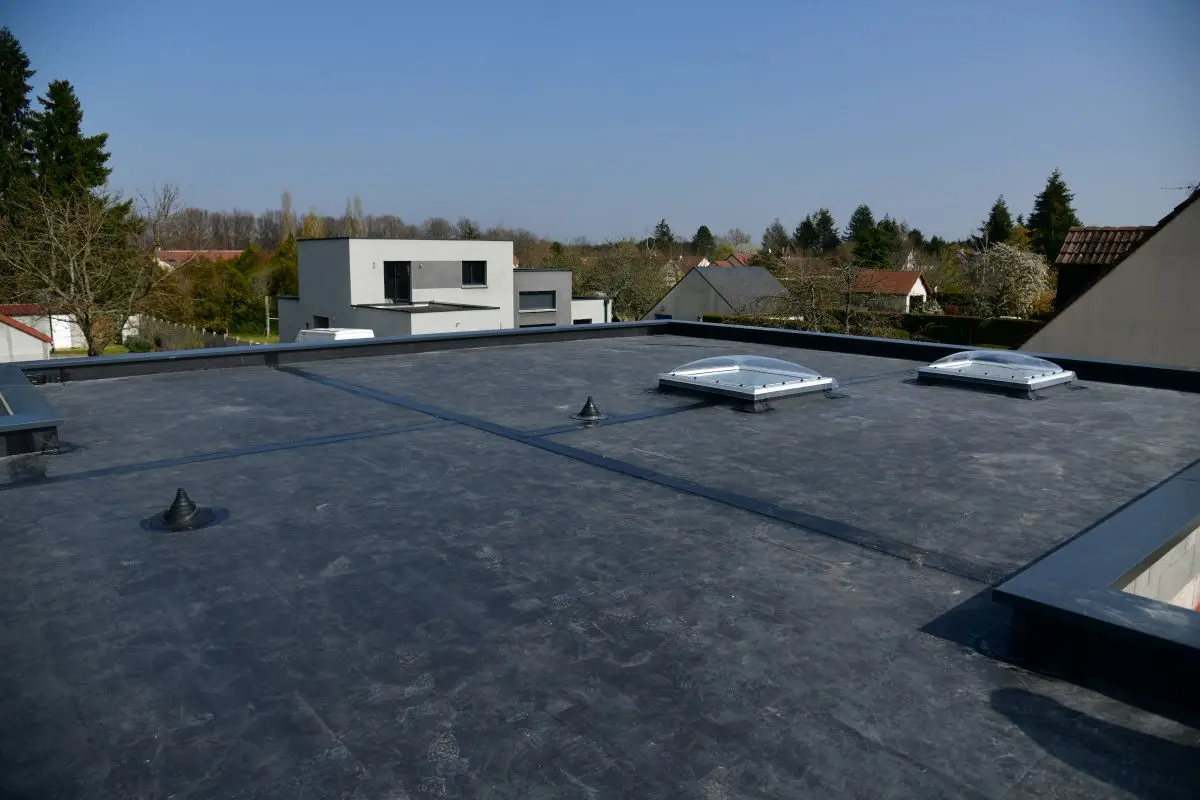
Rubber Roofing (7 Reasons It Is A Durable Roof Option 2026)
08.20.2026
13 Min Read
When it comes to flat and low-slope commercial roofs, few materials have proven themselves as consistently as rubber. Rubber roofing has been protecting commercial properties for decades, and in 2026 it remains one of the most reliable options available for property owners managing buildings where traditional shingles were never designed to perform. If you oversee a warehouse, retail strip, office building, or any flat-roofed commercial property, understanding how rubber roofing holds up against the alternatives is the starting point for protecting your investment and controlling your long-term maintenance costs.
Here is what this guide covers:
- What rubber roofing is and the main types used on commercial properties in 2026
- Seven reasons rubber roofing is one of the most durable flat roof options available
- How rubber roofing compares to TPO, modified bitumen, and other commercial flat roof systems
- What affects the cost of a rubber roofing installation in North Carolina
- What commercial property owners should look for when hiring a contractor
What Rubber Roofing Is and Why It Matters for Commercial Properties
Rubber roofing refers primarily to EPDM (ethylene propylene diene monomer), a synthetic rubber membrane that has been used on commercial flat roofs since the 1960s.It is installed as a continuous membrane across the roof surface, bonded with adhesive or mechanically fastened, and seamed with either tape or liquid sealant. The result is a seamless or near-seamless waterproof layer that handles the standing water, thermal movement, foot traffic from maintenance crews, and UV exposure that commercial flat roofs experience in ways that shingle systems are not designed to manage.
For Mebane and surrounding areas commercial property owners, EPDM is frequently the most cost-effective and longest-lasting solution available for flat-roofed buildings. North Carolina’s combination of hot summers, freeze-thaw winters, and active storm seasons creates exactly the conditions that rubber roofing handles well, and a roof failure on a commercial property carries consequences that go well beyond repair costs alone, including business disruption, inventory damage, and tenant liability.
Rubber roofing delivers:
- Long lifespan: EPDM membranes routinely last 25 to 50 years when properly installed and maintained, significantly outperforming modified bitumen and comparable to or exceeding TPO in real-world commercial performance
- Weather flexibility: Rubber remains flexible across a wide temperature range, accommodating the expansion and contraction that large commercial roof decks experience through North Carolina’s seasonal swings without cracking or losing adhesion
- Waterproofing reliability: The continuous membrane eliminates the seams and joints that are the most common failure points on commercial flat roofing systems
- Low maintenance requirements: EPDM requires less frequent intervention than many competing flat roof systems and is straightforward to repair when damage does occur — an important consideration for property owners managing maintenance budgets across multiple systems
- Cost effectiveness: Rubber roofing is typically less expensive to install than TPO or PVC on an installed cost-per-square-foot basis, and its long lifespan makes the lifetime cost particularly competitive for commercial property owners evaluating total cost of ownership
7 Reasons Rubber Roofing Is a Durable Commercial Roof Option in 2026
Durability in commercial roofing means more than lasting a long time. It means performing consistently under real-world conditions, resisting the specific failure modes that flat commercial roofs face, remaining maintainable over a long service life, and keeping repair costs predictable. Rubber roofing checks all of those boxes in ways that few competing materials do across the board.
1. Exceptional Resistance to UV Degradation
UV exposure is one of the primary drivers of premature aging on flat commercial roof systems. Materials that cannot handle sustained UV radiation develop surface cracking, lose flexibility, and begin to fail at seams and edges long before their rated lifespan — creating repair costs and potential interior damage that disrupt building operations.
EPDM is inherently UV resistant at the material level. Unlike some single-ply membranes that rely on surface coatings for UV protection, the rubber compound itself resists UV degradation without needing additional treatment. This is particularly valuable in North Carolina, where commercial roofs receive direct sun exposure year-round and the UV index during summer months is consistently high across the state.
- EPDM maintains flexibility and integrity under sustained UV exposure without surface cracking
- White-coated or light-colored EPDM options are available for property owners prioritizing energy efficiency and reduced cooling loads
- UV resistance contributes directly to the long service life that makes EPDM cost-effective over the full ownership period
2. Superior Flexibility Across Temperature Extremes
Large commercial roof decks expand and contract significantly with temperature changes. A sizable building can see its roof deck move several inches seasonally, and roofing materials that cannot accommodate that movement develop cracks, split seams, and adhesion failures that allow water infiltration — often in areas that are difficult to locate and expensive to repair.
EPDM remains flexible and pliable across a temperature range from well below freezing to well above 100 degrees Fahrenheit. That flexibility allows it to move with the deck rather than fighting against it, which is a fundamental reason why EPDM outlasts more rigid flat roof materials in climates with significant temperature variation. For Mebane and surrounding areas commercial property owners, where winters bring freeze-thaw cycles and summers push temperatures well into the 90s, that flexibility range directly translates to fewer maintenance calls and a longer interval before replacement is needed.
- EPDM remains pliable at temperatures as low as minus 40 degrees Fahrenheit
- Thermal movement is accommodated by the membrane rather than resisted, preventing the stress cracking that affects more rigid systems
- Flexibility is maintained throughout the full service life of the membrane, not just in the early years after installation
3. Excellent Puncture and Impact Resistance
Commercial flat roofs take more physical abuse than any other roof type. They are regularly accessed by HVAC technicians, mechanical contractors, satellite and antenna installers, and building maintenance personnel. Equipment is mounted directly on the roof surface, and the membrane around those mounting points is subject to ongoing mechanical stress. Hail, wind-driven debris, and falling tree limbs add impact stress on top of that ongoing foot traffic.
EPDM handles puncture and impact stress well relative to its installed cost. The rubber compound deforms under impact rather than cracking, and the membrane can be repaired efficiently with adhesive patches when punctures do occur. Premium EPDM products are manufactured in thicknesses up to 90 mil, which provides meaningful additional protection in high-traffic areas or around mechanical equipment on busy commercial roofs.
- Standard commercial EPDM is available in 45 mil, 60 mil, and 90 mil thicknesses; heavier products suit high-traffic applications
- Impact resistance is inherent to the rubber compound rather than dependent on surface treatments that can wear away
- Puncture repairs on EPDM are straightforward and effective when completed by an experienced commercial roofing contractor
4. Long Track Record of Real-World Commercial Performance
In 2026, EPDM has been in widespread use on commercial flat roofs for over 60 years. That track record provides something that newer materials cannot: decades of real-world performance data across millions of commercial installations in a wide range of climates, building types, and applications.
That history matters significantly when evaluating materials for a commercial property. New products may perform well in accelerated laboratory testing, but EPDM’s performance across actual decades of service in real commercial buildings is the most reliable predictor of how it will hold up on your property. Mebane and surrounding areas commercial roofing contractors who have been working in the market for 20 or more years have seen firsthand how EPDM ages, how it fails when it does fail, and how those failure patterns compare to competing systems across a range of building types.
- Over six decades of documented performance data across commercial buildings of every size and type
- Failure modes are well understood and predictable, making maintenance planning and budgeting straightforward
- Contractor experience with the product is widely available, reducing the risk of installation errors that come with newer or less common systems
5. Resistance to Ponding Water
All flat commercial roofs deal with ponding water. Code requires flat and low-slope roofs to drain within 48 hours of rain, but in practice, many commercial buildings develop low spots over time where water sits for longer periods as the roof deck deflects under load. The roofing material’s ability to handle sustained water contact without deteriorating is a critical performance factor for property owners.
EPDM is not degraded by long-term water contact. The membrane can sit under ponding water without swelling, delaminating, or losing its waterproofing properties. This is one of the specific advantages EPDM holds over some competing single-ply membranes that experience accelerated degradation when exposed to sustained ponding — a failure mode that can develop gradually and go undetected until water has penetrated the insulation below.
- EPDM does not absorb water or swell under ponding conditions
- Seams made with compatible tape or liquid adhesive maintain their integrity under sustained water contact when properly installed
- Ponding resistance is a particular advantage in North Carolina’s heavy rainfall seasons, when large commercial roof drains can be overwhelmed during significant storm events
6. Straightforward Repair and Maintenance That Fits Commercial Budgets
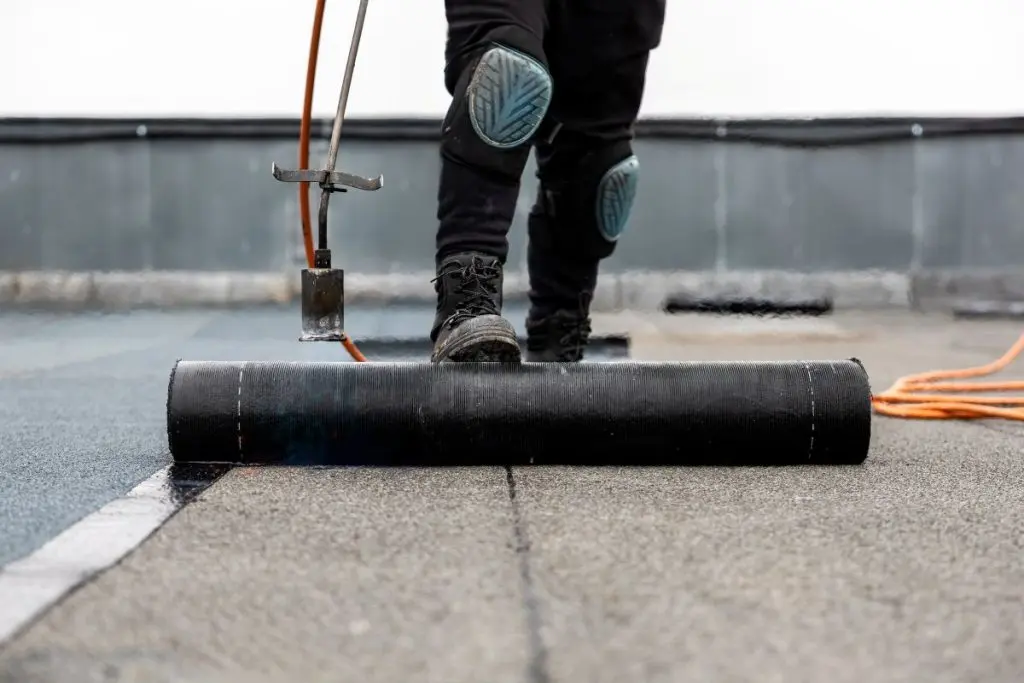
A roofing material that lasts 40 years is only as valuable as your ability to maintain and repair it affordably over that period. Some commercial flat roof systems develop failure modes that are expensive or technically complex to address, which drives up lifetime maintenance costs even when the base material performs well — a meaningful concern for property owners managing repair budgets across multiple systems and building needs.
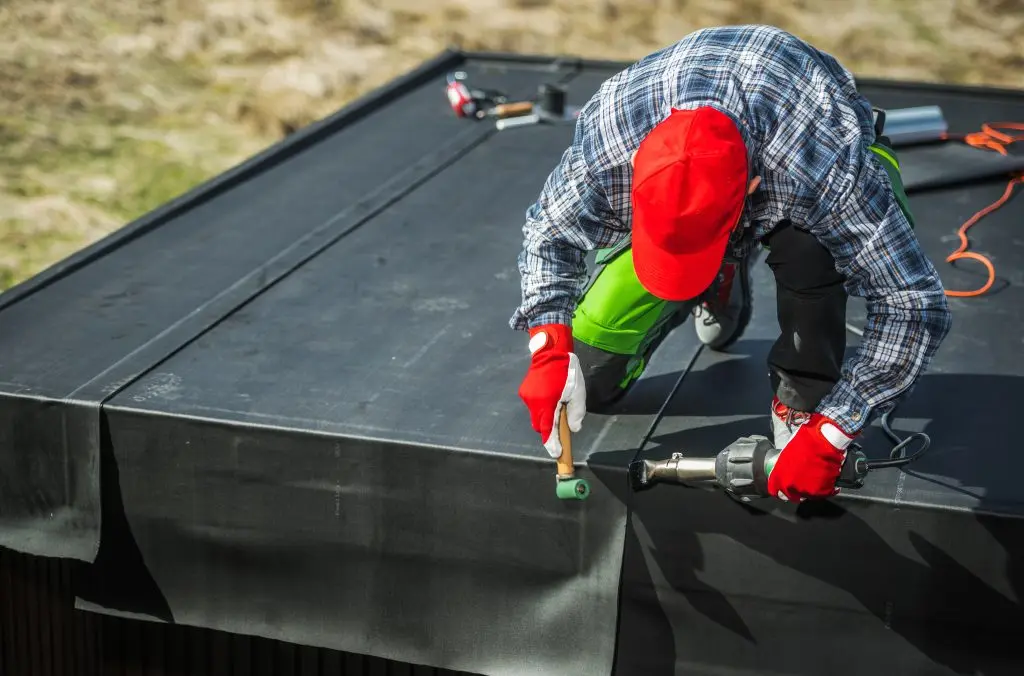
EPDM repairs are among the most straightforward in the commercial flat roofing industry. Small punctures and tears are addressed with self-adhering EPDM patches that bond directly to the membrane. Seam failures, which are the most common maintenance issue on any membrane roofing system, are repaired with seam tape and appropriate adhesive. A skilled commercial roofing contractor can typically complete most routine EPDM repairs efficiently, minimizing both labor costs and building disruption.
- Patch repairs bond directly to the existing membrane without requiring specialized equipment or extended building access
- Seam repair products are widely available and compatible with all major EPDM systems
- The repairability of EPDM effectively extends the practical service life beyond what the initial installation alone would deliver
7. Environmental Profile That Supports Sustainability Goals
In 2026, the environmental profile of roofing materials matters to a growing number of commercial property owners, particularly those managing properties subject to ESG reporting requirements or sustainability certifications. EPDM has several environmental advantages worth noting for Mebane and surrounding areas commercial property owners evaluating the full lifecycle impact of their roofing choice.
EPDM is manufactured without chlorine, which distinguishes it from PVC-based single-ply membranes that raise environmental concerns during both manufacturing and end-of-life disposal. At the end of its service life, EPDM can be recycled into products including athletic tracks, playground surfaces, and automotive components. Some manufacturers offer take-back programs for old membrane removed during re-roofing projects, reducing the disposal footprint of a large commercial roof replacement.
- EPDM production does not involve chlorine-based chemistry
- End-of-life recyclability supports sustainability reporting and certification programs
- Long service life means fewer replacement cycles over the building’s life, reducing total material consumption and associated embodied carbon
How Rubber Roofing Compares to Other Commercial Flat Roof Systems
Commercial property owners evaluating flat roof options will encounter several competing systems, each with different performance profiles, cost structures, and ideal applications.
| System | Typical Lifespan | Installed Cost | UV Resistance | Flexibility | Best Application |
| EPDM (Rubber) | 25 to 50 years | Low to moderate | Excellent | Excellent | Most commercial flat roofs |
| TPO | 15 to 30 years | Moderate | Good | Good | Energy-conscious and cool roof applications |
| PVC | 20 to 30 years | Moderate to high | Good | Moderate | Chemical exposure environments |
| Modified Bitumen | 10 to 20 years | Low to moderate | Moderate | Moderate | Budget replacements |
| Built-Up Roofing (BUR) | 15 to 30 years | Moderate | Good | Low | Large low-slope commercial applications |
EPDM’s combination of long lifespan, competitive installed cost, and genuine flexibility makes it the default recommendation for most standard commercial flat roof applications. TPO is worth considering when energy efficiency and cooling cost reduction are primary drivers, as its reflective white surface reduces heat gain more effectively than standard black EPDM. PVC earns its place in environments where chemical exposure is a factor — restaurant exhaust systems, certain manufacturing operations — but is typically over-specified for standard commercial use.
What Affects the Cost of Rubber Roofing on a Commercial Property
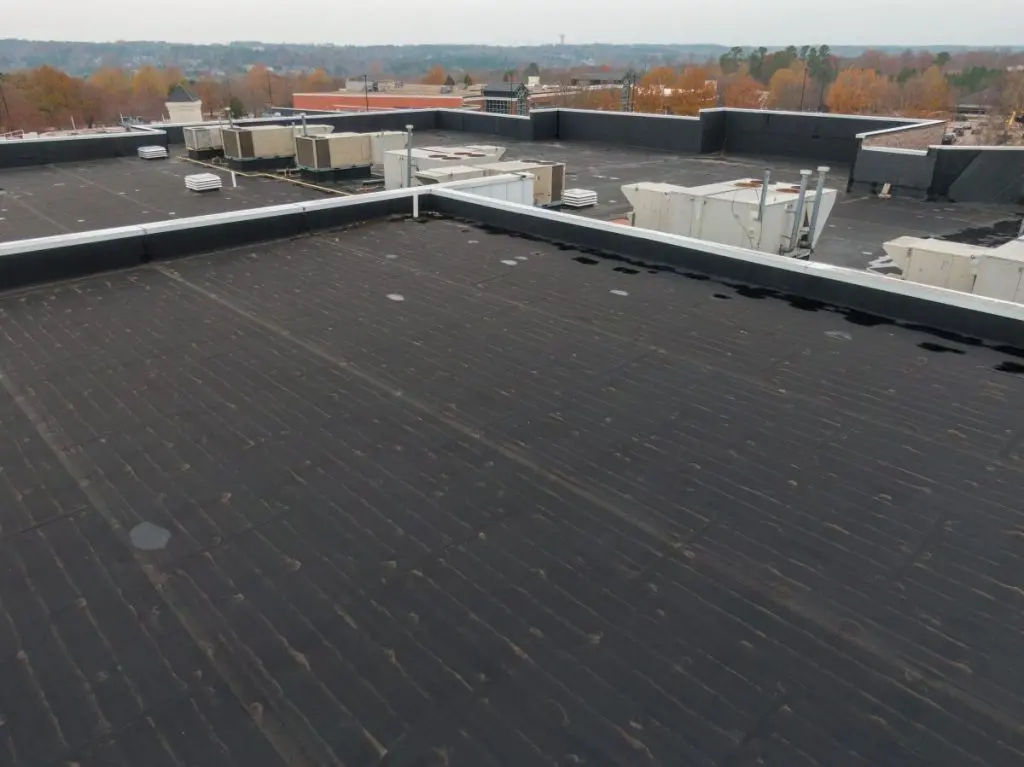
Installation cost for rubber roofing on a commercial property varies based on several factors, and understanding them helps property owners evaluate contractor quotes accurately and plan capital budgets effectively.
Building Size and Roof Configuration
EPDM is priced per square foot installed, with larger roofs generally yielding lower per-square-foot costs as mobilization and disposal expenses are spread across more area. Complex roofs with multiple HVAC curbs, drains, penetrations, and transitions cost more per square foot because the membrane detailing at each point is labor-intensive — and commercial roofs typically have many more of these features than residential applications.
Membrane Thickness Selection
Standard commercial EPDM installations use 60 mil membrane as the baseline for most applications. The upgrade to 90 mil provides meaningfully better puncture resistance for roofs with heavy foot traffic from maintenance personnel or significant mechanical equipment. Property owners should discuss membrane thickness with their contractor in the context of the specific building’s use and access patterns, not just upfront cost.
Attachment Method and Wind Uplift Requirements
Commercial EPDM is installed using fully adhered, mechanically fastened, or ballasted methods. Fully adhered installations provide the best wind uplift resistance and are typically required in higher wind zones or on taller buildings. Mechanically fastened systems reduce installed cost but create regular fastener locations that require monitoring. Ballasted systems, which use stone or pavers, are less common on commercial roofs but remain an option for specific applications. North Carolina’s building code wind uplift requirements should drive the attachment method discussion with your contractor.
Contractor Qualifications and Warranty Coverage
Commercial roofing is a specialized discipline, and the contractor’s qualifications affect both the quality of the installation and the warranty coverage available. GAF-certified commercial contractors are authorized to offer enhanced manufacturer-backed warranties that provide property owners with coverage on both materials and workmanship. Verifying contractor certification, licensing, and insurance before awarding a commercial roofing contract is standard due diligence that protects the property and the investment.
Making the Right Roofing Decision for Your Commercial Property
Rubber roofing has earned its place as one of the most reliable commercial flat roof solutions available, and in 2026 it continues to offer a combination of durability, maintainability, and cost-effectiveness that competing systems struggle to match across the board. The seven reasons covered above represent a consistent performance profile built on over six decades of real-world commercial application — not just laboratory results.
At Barkley-Jensen Roofing and Restoration, we help commercial property owners in Mebane and surrounding areas evaluate their flat roof options honestly and install the right system for their specific building. We are GAF Certified, licensed, and insured in North Carolina, and we back every commercial project with professional workmanship and transparent communication about every material and installation decision. If your commercial roof is approaching the end of its service life or you are dealing with recurring leaks that patch repairs are not resolving, contact us today and we will conduct a thorough assessment and give you a clear picture of your options.