




 Get Started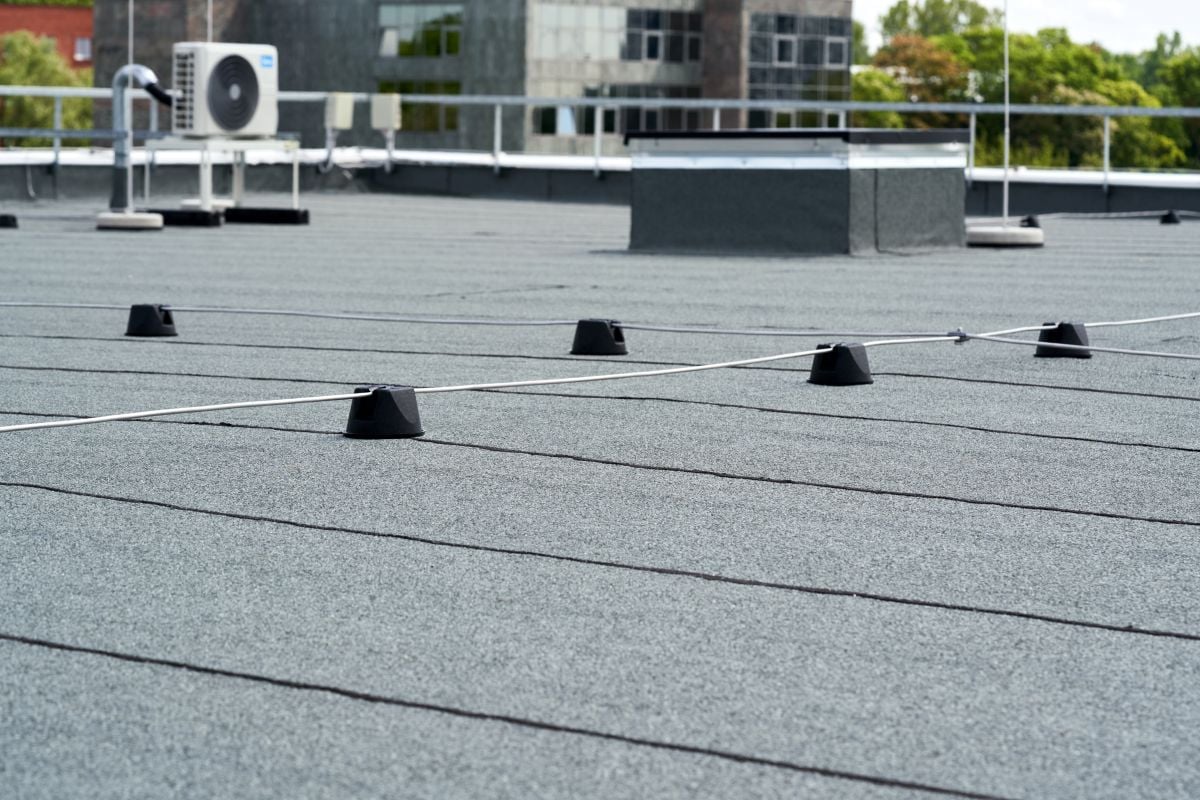
What Commercial Roofing Systems Are Common In Durham, NC?
06.04.2026
11 Min Read
Durham’s commercial property landscape is as varied as the city itself, from converted historic warehouses and thriving research facilities to retail strip centers and large industrial parks. Every one of those buildings relies on a roofing system that was specified at some point for a set of reasons, and understanding those reasons matters enormously when it is time to replace, repair, or upgrade. Knowing what commercial roofing systems are common in Durham, NC gives property owners and facility managers the foundation they need to evaluate contractor proposals, compare materials intelligently, and plan budgets with confidence. Those who take time to understand what separates one approach from another when it comes to protecting a commercial building consistently make smarter decisions when the time to act arrives.
In this guide, you will learn:
- Why the roofing system you choose has lasting consequences for your property
- The six most widely used commercial roofing systems in the Durham area
- How Durham’s specific climate affects system performance over time
- How to match the right system to your building type and operational needs
- Key warning signs that your current commercial roof may be approaching the end of its life
Why Choosing the Right Commercial Roofing System Has Long-Term Consequences
A commercial roof is not simply a weather barrier. It is a structural component that affects energy efficiency, interior climate control, liability exposure, insurance costs, and long-term maintenance budgets all at once. Choosing the wrong system for a Durham commercial building does not just create performance problems in year one. It creates compounding costs across the entire life of the roof, through premature repairs, elevated utility bills, and shortened replacement cycles that drain capital better spent elsewhere.
Durham’s position in the Piedmont region means the city contends with hot, humid summers, periodic severe storms, and enough seasonal temperature variation to stress roofing materials in multiple directions throughout the year. A system that performs well in a dry, mild climate may underperform significantly in this environment, which is why local knowledge and material selection expertise are not optional when planning a commercial roof project.
Here is why system selection carries such significant long-term weight:
- Energy Performance: The roofing membrane and insulation system beneath it directly influence how much energy a building consumes to maintain indoor temperatures, especially during Durham’s extended cooling season from late spring through early fall.
- Maintenance Frequency and Cost: Some systems require regular inspections, recoating, and detail work to maintain warranty compliance. Others are nearly maintenance-free under normal conditions. The system you choose determines your ongoing cost of ownership.
- Lifespan and Replacement Cycles: Commercial roofing systems vary widely in expected service life. Choosing a system with a shorter lifespan to save money upfront often results in higher total expenditure over a 20-year horizon than investing in a longer-lasting option from the start.
- Insurance and Liability Implications: Properly installed, warranted commercial roofing reduces the risk of water intrusion claims, structural damage liability, and coverage disputes following storm events.
- Tenant Retention and Property Value: For investment properties and multi-tenant commercial buildings, a sound roof signals to tenants that the property is professionally managed, which directly supports occupancy rates and long-term asset value.
6 Commercial Roofing Systems Commonly Used in Durham, NC
Durham commercial buildings span a wide range of construction types, ages, and use cases, and the roofing market reflects that diversity. Here are the six systems most frequently specified on commercial projects in the area.
1. TPO (Thermoplastic Polyolefin) Membrane Roofing
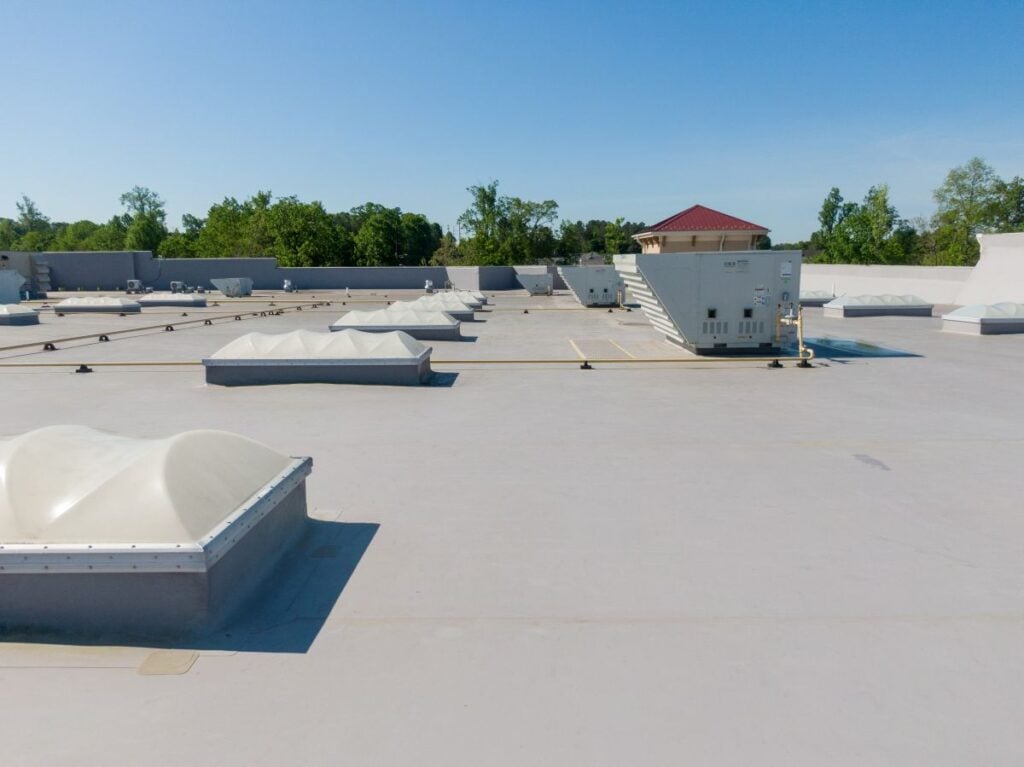
TPO has become the most widely installed commercial flat roofing system in the United States over the past two decades, and it is particularly prevalent on newer commercial construction across the Durham and Research Triangle market. Its popularity in this region is not accidental. The white or light-colored membrane surface reflects solar radiation rather than absorbing it, which delivers real energy savings in North Carolina’s warm climate.
According to the U.S. Department of Energy, cool roof membranes like TPO can reduce peak cooling demand by 10 to 15 percent, making them especially valuable for commercial properties in hot and humid climates like Durham’s where cooling costs dominate energy budgets for much of the year.
- Heat-welded seams create a fully monolithic, watertight system
- Resistant to puncture, tearing, and UV degradation
- Available in a range of thicknesses for varying performance requirements
- Compatible with rooftop equipment, solar arrays, and green roof assemblies
TPO is an excellent fit for flat or low-slope commercial roofs and is commonly specified on office buildings, retail centers, medical facilities, and light industrial properties throughout the Triangle.
2. EPDM (Ethylene Propylene Diene Monomer) Roofing
EPDM is a rubber-based membrane that has been a commercial roofing staple for more than 50 years. It remains in widespread use across Durham’s older commercial building stock and continues to be specified on new projects where its long track record and competitive cost are attractive. EPDM performs exceptionally well against UV exposure and resists the kind of ozone and weathering degradation that compromises other membrane types over time.
- Ballasted, mechanically attached, or fully adhered installation options
- Proven service life of 25 years or more with proper maintenance
- Flexible and resilient under temperature cycling from cold winters to hot summers
- Cost-competitive with TPO on most project types
One consideration for Durham property owners is that traditional black EPDM absorbs heat rather than reflecting it, which can contribute to higher cooling loads. White-coated EPDM and fleece-backed versions can address this, but the reflective advantage of TPO or PVC is more inherent to those systems.
3. PVC (Polyvinyl Chloride) Roofing
PVC roofing membranes share several characteristics with TPO, including heat-welded seams and excellent reflectivity, but they bring their own set of performance advantages that make them the preferred choice in certain applications. PVC is particularly noted for its chemical resistance, which makes it the go-to option for restaurants, food processing facilities, and any commercial building that exhausts grease-laden air through rooftop systems.
- Superior resistance to grease, chemicals, and industrial pollutants
- Heat-welded seams comparable in strength and watertightness to TPO
- Highly reflective surface supports energy efficiency goals
- Slightly higher material cost than TPO, offset by durability in demanding environments
For Durham’s growing food and beverage sector and its significant concentration of research and laboratory facilities, PVC deserves serious consideration as a primary roofing system.
4. Modified Bitumen Roofing
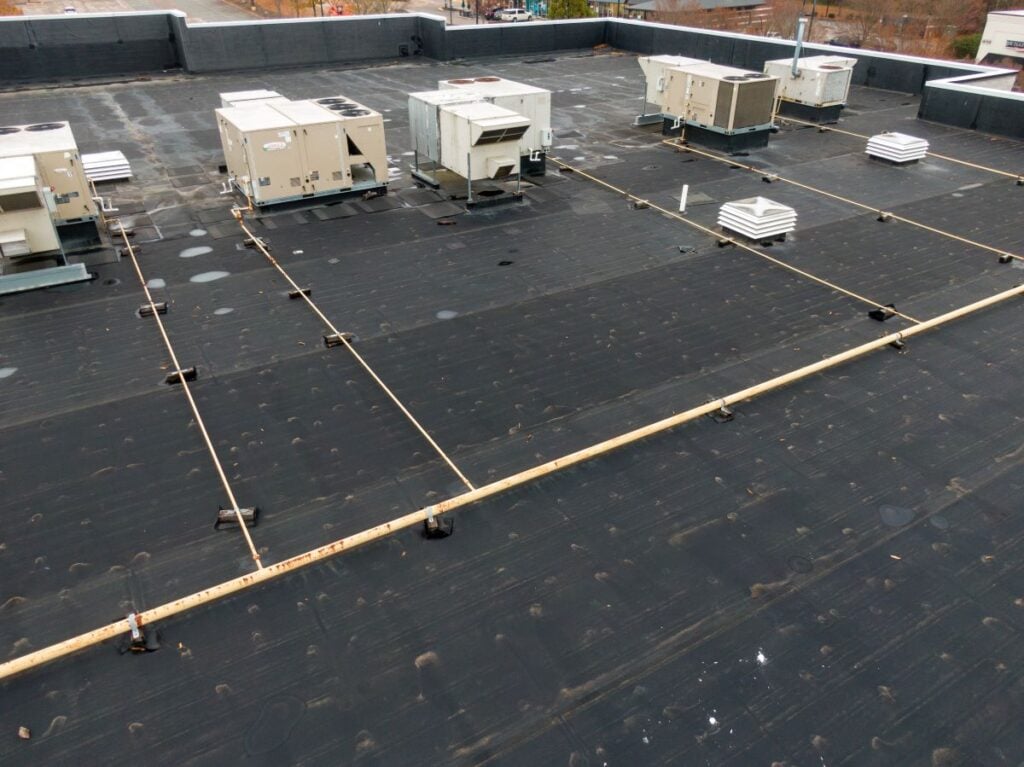
Modified bitumen is a multi-ply asphalt-based system that bridges the gap between traditional built-up roofing and modern single-ply membranes. It is widely used on low-slope commercial roofs across Durham, particularly on older buildings and those with complex rooflines, heavy equipment loads, or significant foot traffic from maintenance personnel. The layered construction gives modified bitumen excellent puncture resistance and waterproofing redundancy.
- APP and SBS modification types offer different performance characteristics
- Torch-applied, cold-applied, and self-adhering installation methods available
- Excellent performance around complex penetrations and rooftop equipment
- Compatible with coatings that can extend service life and improve reflectivity
Modified bitumen is a durable, time-tested system that excels on roofs where physical robustness matters more than cutting-edge reflectivity.
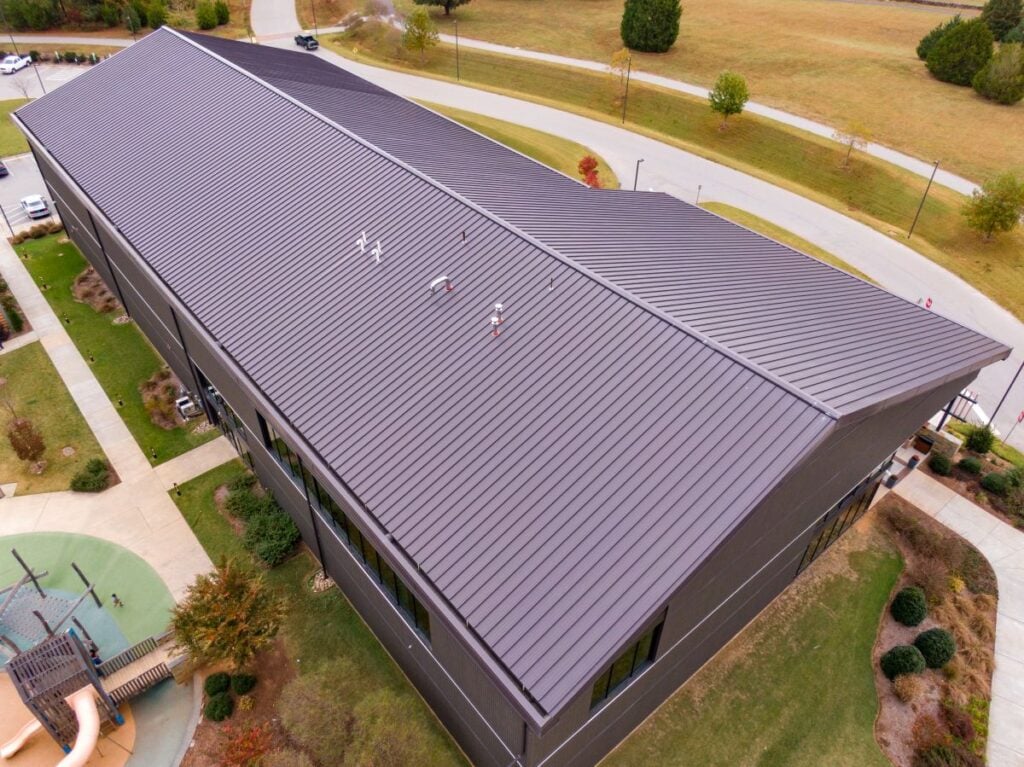
5. Standing Seam Metal Roofing
Metal roofing is the longest-lasting commercial system available and has gained significant traction in the Durham market across a range of property types, from retail and hospitality to manufacturing and storage. Standing seam metal in particular offers a clean architectural profile that suits modern commercial construction while delivering performance metrics that no membrane system can match in terms of raw longevity.
- Service life of 40 to 60 years or more with minimal maintenance
- Excellent wind uplift resistance, which matters during severe storm events
- Naturally reflective surfaces reduce heat gain
- Compatible with solar panel integration on new and retrofit projects
The higher initial installation cost is the primary reason some property owners hesitate, but when evaluated on a cost-per-year-of-service basis, standing seam metal frequently proves more economical than membrane systems that require replacement every 20 to 25 years.
6. Built-Up Roofing (BUR)
Built-up roofing, commonly called BUR or tar-and-gravel roofing, is one of the oldest commercial roofing systems still in active use. It is constructed from alternating layers of bitumen and reinforcing fabrics, finished with a gravel or aggregate surface that protects against UV degradation and physical damage. BUR remains on many of Durham’s older commercial buildings and is still specified in some new construction applications where its redundant waterproofing layers are valued.
- Multiple redundant layers provide exceptional waterproofing protection
- Gravel surface adds ballast and UV resistance
- Long history of reliable performance in varied climates
- Heavier than single-ply systems, which requires structural consideration
While BUR has largely been superseded by single-ply membranes on most new commercial projects, it remains a relevant system for Durham property owners managing older buildings where the existing BUR roof still has serviceable life remaining.
How Durham’s Climate Shapes Commercial Roofing Performance
Selecting a roofing system without accounting for local climate conditions is one of the most common mistakes commercial property owners make. Durham sits in a transitional climate zone that creates real stresses for roofing materials throughout the year, and understanding those stresses helps clarify which systems are best suited to the environment.
- Summer Heat and Humidity: Durham’s summers are long, hot, and humid. Roofing membranes that absorb heat rather than reflect it can reach surface temperatures well above ambient air temperature, accelerating material degradation and driving up cooling costs inside the building. Reflective membranes like TPO and PVC have a clear performance advantage during this season.
- Seasonal Thermal Cycling: The shift between Durham’s warm summers and its cooler winters puts repeated expansion and contraction stress on roofing materials. Systems with strong flexibility and seam integrity, particularly heat-welded membranes and modified bitumen, handle thermal cycling more reliably than systems with mechanical fastening alone.
- Storm and Wind Events: The Triangle region receives periodic severe thunderstorms and, on occasion, the remnants of tropical weather systems. High wind uplift resistance and watertight seam construction are important selection criteria for any system installed in this market.
- UV Exposure: North Carolina’s sun intensity is meaningful year-round. Unprotected roofing membranes degrade faster under sustained UV exposure, which is why reflective surfaces, quality underlayment systems, and UV-stabilized materials are worth the investment at installation.
Matching the Right System to Your Durham Commercial Property
With several viable options on the market, the right system for your building depends on a combination of factors that are specific to your property, your operations, and your long-term ownership goals. There is no single best commercial roofing system; there is only the best system for a given set of circumstances.
Consider Your Roof Slope and Drainage Configuration
Commercial roofing systems are designed for specific slope ranges. TPO, EPDM, PVC, modified bitumen, and BUR are all designed for flat or low-slope applications, while standing seam metal works well across a broader slope range including steeper pitches. Matching the system to your roof geometry is a fundamental requirement.
Factor In Your Building’s Use and Operational Profile
What happens inside and on top of your building should directly influence your material selection. Restaurants and food processing facilities should prioritize PVC for its chemical resistance. Buildings with heavy rooftop equipment traffic benefit from the robustness of modified bitumen or BUR. Properties pursuing energy certifications or solar integration align well with TPO, PVC, or standing seam metal.
Evaluate Total Cost of Ownership, Not Just Installation Price
The table below illustrates how the same fixed budget produces very different outcomes depending on which system is chosen, when you account for expected lifespan and maintenance requirements over a 40-year horizon.
| System | Approximate Lifespan | Relative Installed Cost | Maintenance Level |
| TPO | 20 to 30 years | Moderate | Low |
| EPDM | 20 to 30 years | Moderate to Low | Low to Moderate |
| PVC | 20 to 30 years | Moderate to High | Low |
| Modified Bitumen | 15 to 25 years | Moderate | Moderate |
| Standing Seam Metal | 40 to 60 years | High | Very Low |
| Built-Up Roofing (BUR) | 15 to 25 years | Moderate | Moderate to High |
Work With a Contractor Who Knows the Local Market
A contractor who regularly installs commercial roofing in Durham understands how local weather patterns, permitting requirements, and supplier relationships affect a project. That local knowledge translates into better material recommendations, more accurate timelines, and fewer surprises during installation. Certifications from manufacturers like GAF and CertainTeed also signal that a contractor installs to the standards required to honor full system warranties.
Choose a Commercial Roofing System That Works as Hard as You Do
Durham’s commercial property owners are making long-term investments every time they select and install a roofing system. Getting that decision right the first time is far less costly than managing the consequences of the wrong choice over the years that follow. Whether your building calls for the energy efficiency of TPO, the chemical resistance of PVC, the durability of modified bitumen, or the longevity of standing seam metal, the decision deserves careful analysis and the guidance of a contractor who understands the Durham market inside and out.
Barkley-Jensen Roofing brings the expertise, manufacturer certifications, and genuine commitment to customer education that commercial property owners need to make confident decisions. If you are ready to explore your options or want a professional assessment of your existing commercial roof, contact us today and let Barkley-Jensen Roofing help you find the right fit for your property.