




 Get Started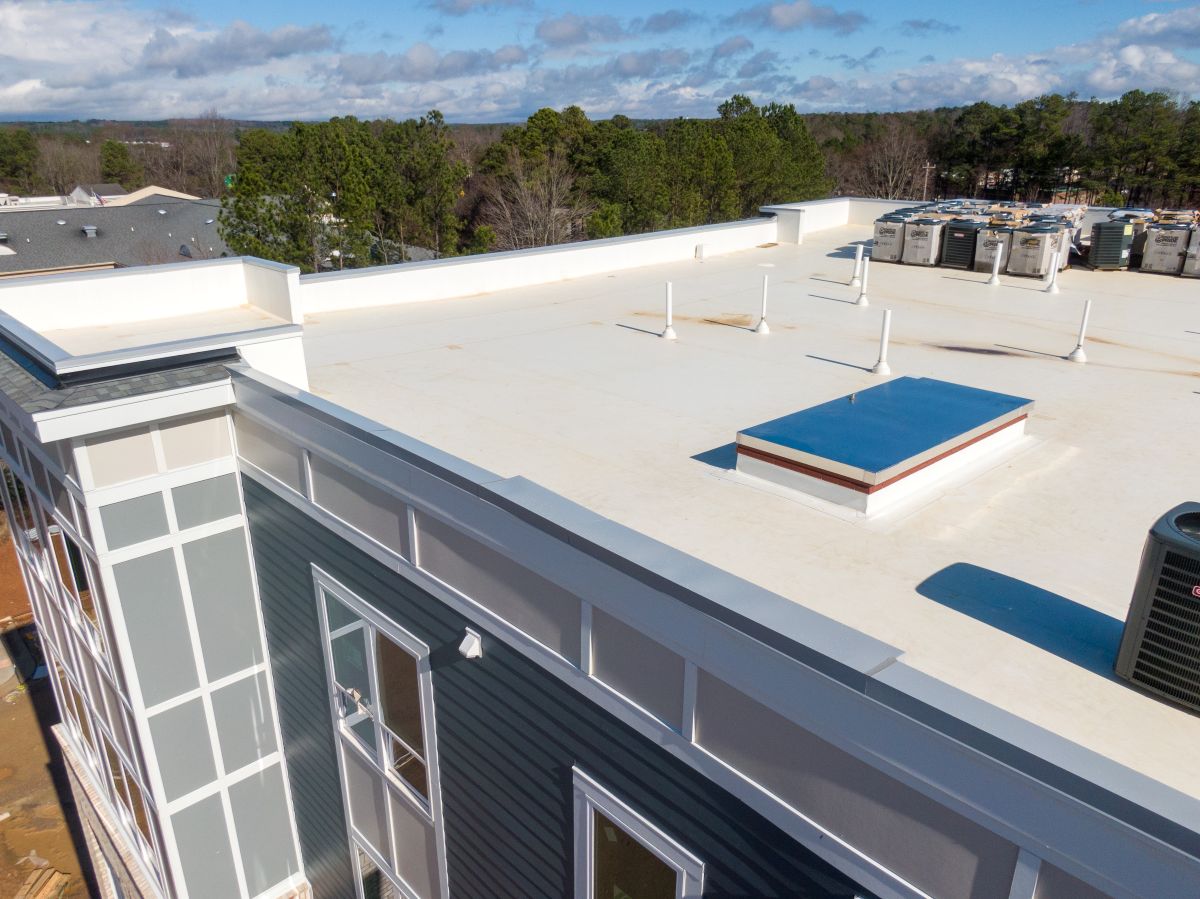
Why Do Commercial Buildings Have Flat Roofs? 8 Reasons
02.24.2026
6 Min Read
If you have ever driven through a business district, you may have asked yourself, why do commercial buildings have flat roofs while most homes feature steep slopes? The answer comes down to practicality, cost efficiency, and structural design. Commercial properties have different functional demands than residential homes, and flat roofing systems are often the most logical solution. For property owners researching durable low slope roofing options and long term protection strategies, understanding these reasons helps guide informed decisions.
In this guide, you will learn:
- Why flat roofs are commonly used on commercial buildings
- The structural and financial advantages they provide
- How flat roofs handle drainage and rooftop equipment
- Whether a flat roof is the right choice for your commercial property
Why Flat Roof Design Matters for Commercial Properties
Roof design is not just about appearance. It directly impacts construction costs, maintenance requirements, energy efficiency, and usable space. Commercial buildings are often much larger than homes and require different structural considerations.
For business owners in Cary and surrounding areas, choosing the right roofing system affects both daily operations and long term budgets. Understanding why commercial buildings use flat roofs can help property managers make smarter investment decisions.
Here are several key benefits of understanding flat roof systems:
- Budget Awareness: Knowing the cost advantages helps with capital planning and long term forecasting.
- Maintenance Planning: Flat roofs require specific inspection and care routines that differ from steep slope systems.
- Operational Efficiency: Many commercial systems are designed to accommodate equipment and utilities.
- Space Optimization: Flat roofs can provide additional functional square footage.
- Energy Performance Insight: Roofing materials and layout influence insulation and efficiency.
Commercial roofing decisions have lasting consequences. A well informed property owner is better prepared to protect their building.
8 Reasons Commercial Buildings Have Flat Roofs
Flat roofs are chosen intentionally for commercial structures. Below are eight primary reasons they are so widely used.
1. Lower Initial Construction Costs
One of the most significant reasons commercial buildings have flat roofs is cost efficiency. Flat systems typically require fewer materials and less complex framing compared to steep slope roofs.
Cost advantages often include:
- Reduced lumber or steel for framing
- Simpler installation processes
- Lower labor time requirements
For large commercial buildings, these savings can be substantial.
2. Structural Simplicity for Large Spans
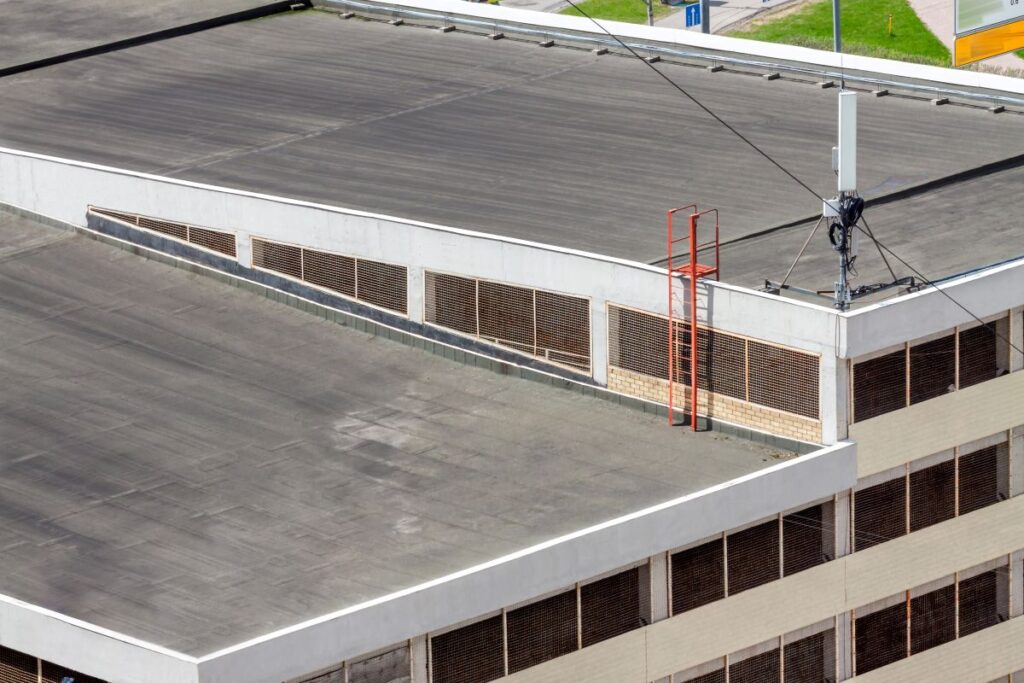
Commercial properties often feature wide open interior layouts such as warehouses, retail stores, or office spaces. Flat roofs are easier to construct over large spans without complicated angles.
Structural benefits include:
- Straightforward load distribution
- Efficient use of support beams
- Compatibility with concrete or steel construction
This simplicity supports both durability and design flexibility.
3. Easier Installation of HVAC and Mechanical Equipment
Commercial buildings rely heavily on rooftop systems such as HVAC units, exhaust fans, and ventilation systems. Flat roofs provide stable platforms for these installations.
Advantages include:
- Safe access for maintenance crews
- Secure placement of heavy equipment
- Streamlined routing of ducts and wiring
This accessibility improves long term operational efficiency.
4. Usable Rooftop Space
Flat roofs can serve as functional spaces rather than just protective coverings. Many commercial buildings use rooftop areas for practical purposes.
Common uses include:
- Solar panel installations
- Green roofing systems
- Storage of mechanical equipment
- Outdoor gathering spaces in some developments
Maximizing rooftop utility adds value to the property.
5. Faster Construction Timelines
Flat roof systems are generally quicker to install compared to pitched roofs. Fewer angles and simpler framing allow crews to work efficiently.
Faster installation provides:
- Shorter construction schedules
- Reduced labor costs
- Earlier occupancy for tenants
For developers in Cary and surrounding areas, accelerated timelines can be financially beneficial.
6. Modern Aesthetic Appeal
Many commercial properties prioritize clean, contemporary design. Flat roofs contribute to streamlined building profiles that align with modern architectural styles.
Design benefits include:
- Simple, minimalistic appearance
- Compatibility with glass and steel facades
- Flexibility for signage and branding
Architectural trends often influence roofing decisions.
7. Easier Inspection and Maintenance Access
Flat roofs allow maintenance teams to walk safely across the surface during inspections. While proper safety protocols are still required, access is generally more straightforward than steep slope systems.
Maintenance advantages include:
- Simplified leak detection
- Accessible drainage systems
- Safer equipment servicing
Regular inspections are critical for long term performance.
8. Material Versatility
Flat commercial roofs can be constructed using a variety of materials tailored to building needs.
Common options include:
- TPO membranes
- EPDM rubber roofing
- Modified bitumen
- Built up roofing systems
This versatility allows property owners to choose materials based on durability, climate performance, and budget.
How Flat Roofs Handle Drainage and Weather
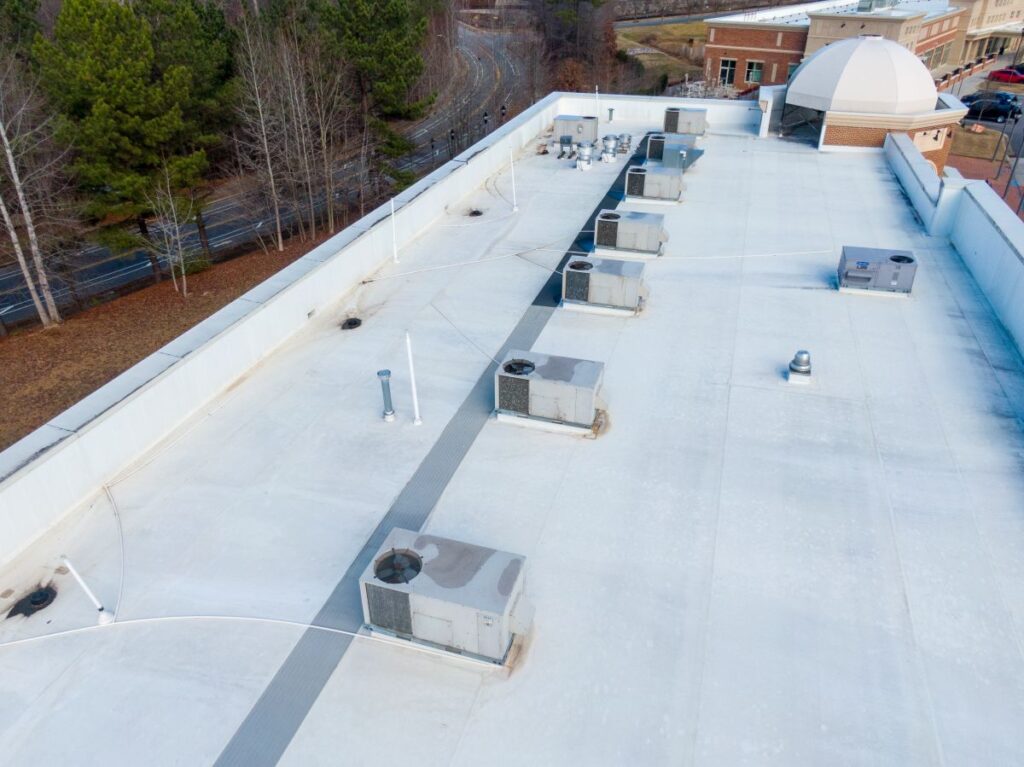
One common misconception is that flat roofs are completely level. In reality, commercial flat roofs are designed with a slight slope to encourage proper drainage.
Drainage systems typically include internal drains, scuppers, or tapered insulation systems that direct water toward designated outlets.
Drainage Solutions
Commercial flat roofs may use:
- Internal drainage pipes
- Perimeter scuppers
- Tapered insulation to create subtle slopes
Proper drainage design is essential to prevent standing water.
Weather Considerations
In Cary and surrounding areas, seasonal rain and humidity require well maintained drainage systems. Flat roofs are engineered to manage rainfall effectively when properly installed and maintained.
Regular inspections help ensure drains remain clear and membranes remain sealed.
Flat Roofs vs Pitched Roofs for Commercial Use
While pitched roofs are common on homes, they are less practical for many commercial properties. Below is a comparison of flat and pitched roofing systems for commercial buildings.
| Feature | Flat Roof | Pitched Roof |
| Construction Cost | Lower | Higher |
| Rooftop Equipment Access | Easy | More Difficult |
| Usable Rooftop Space | High | Limited |
| Structural Complexity | Simpler | More Complex |
| Installation Time | Faster | Slower |
For most commercial applications, flat roofs provide greater flexibility and cost efficiency.
Maintenance Considerations for Commercial Flat Roofs
Although flat roofs offer many advantages, they require routine maintenance to ensure durability.
Property owners in Cary and surrounding areas should schedule regular inspections, especially after heavy storms.
Key maintenance tasks include:
- Clearing debris from drains
- Inspecting membrane seams
- Checking flashing around penetrations
- Monitoring for signs of ponding water
Proactive care prevents minor issues from becoming major repairs.
Flat roofs are durable when properly installed and maintained, but neglect can lead to water intrusion or membrane damage.
Is a Flat Roof Right for Your Commercial Property?
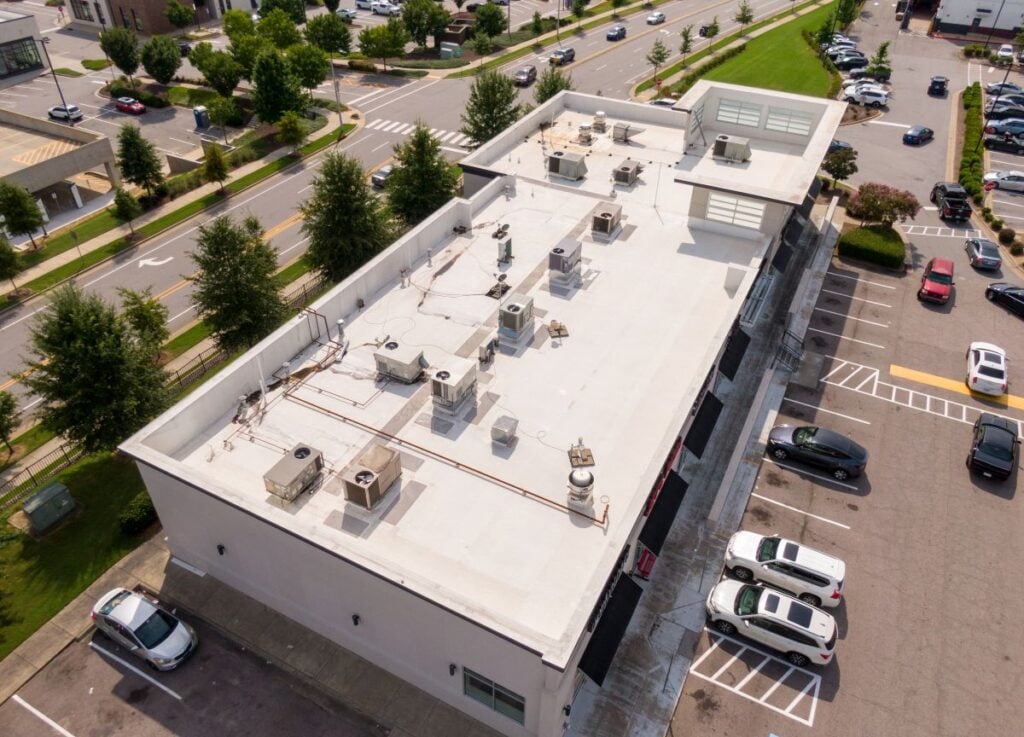
While flat roofs are common, each building is unique. Factors such as size, usage, budget, and architectural goals influence roofing decisions.
Flat roofs are typically ideal for:
- Warehouses
- Retail centers
- Office buildings
- Industrial facilities
Consulting with experienced commercial roofing professionals ensures the system matches your building’s needs.
Understanding why commercial buildings have flat roofs helps property owners evaluate options more effectively and select the best long term solution.
Protect Your Commercial Investment
Flat roofs are widely used in commercial construction because they offer cost savings, structural efficiency, rooftop accessibility, and design flexibility. When properly engineered and maintained, they provide durable, practical protection for businesses of all sizes.
If you own or manage a commercial property and want expert guidance on installation, inspection, or maintenance, contact us today and let Barkley-Jensen Roofing deliver dependable commercial roofing solutions for businesses in Cary and surrounding areas. Your roof protects your operations, your assets, and your future growth.